Sunday, April 22, 2018

She Tried To Report On Climate Change. Sinclair Told Her To Be More "Balanced."

Sinclair Broadcast Group executives reprimanded and ultimately ousted a local news reporter who refused to seed doubt about man-made climate change and “balance” her stories in a more conservative direction.

Her account, detailed in company documents she provided to BuzzFeed News, offers a glimpse at the inner workings of a media giant that has sought to both ingratiate itself to President Donald Trump and cast itself as an apolitical local news provider — a position the documents undermine.

In one 2015 instance, the former news director of WSET-TV in Lynchburg, Virginia, Len Stevens, criticized reporter Suri Crowe because she “clearly laid out the argument that human activities cause global warming, but had nothing from the side that questions the science behind such claims and points to more natural causes for such warming.”

In recent months, Sinclair has garnered intense national attention for forcing stations across the country to carry pro-Trump, “must-run” segments and instructing anchors to read statements touting conservative talking points. Sinclair, which owns local TV stations “affiliated” with name-brand networks like Fox or ABC, has defended the segments and noted they are a small part of its stations’ overall coverage — but Crowe’s experience as a general assignment reporter demonstrates how the parent company’s ideology can permeate throughout local news reporting.

She faced discipline for social media posts and restrictions in reporting on guns, white nationalism, and Liberty University, she said. Company documents do criticize some of her work as unfair and her behavior as unprofessional at times. Overall, the documents provide an unusually close look at one reporter’s experience working for a Sinclair station, and how the smallest details mattered and were recorded.

Crowe told BuzzFeed News that before the October 2015 climate change segment aired, she was ordered by Stevens to include Donald Trump’s opinion on the matter. “When I instructed you to balance the story, by including some of [the] other argument, you insisted there was no need to add such balance to the story,” he wrote in her Jan. 22, 2016, performance review.

"That was the moment where I realized how things were going to go there."

A veteran reporter who has worked at news stations in Texas and Virginia, Crowe said she viewed the story as environmental — not two-sided or political. “I was always covering the flu. I don’t remember a time when for balance I went out to a group of 20 people who are nut jobs that say flu shots kill,” she told BuzzFeed News. The scientific consensus is that climate change is real and humans are largely to blame, but Crowe ultimately read the updated, “balanced” script on air. “That was the moment where I realized how things were going to go there,” she said.

“The management team felt the story was one-sided — indicating that human activity is to blame for global warming — period,” said Stevens, who now works in the communications department at Liberty University, in an emailed statement to BuzzFeed News. “I understand most scientists agree with that assessment. I, myself, feel that human activity at least plays a role, but our opinions really shouldn’t matter. We were there to deliver news, not opinion. And there is NOT 100% agreement on this issue, even among the scientific community.”

Crowe was, in retrospect, struck that Trump’s thoughts were included before he was even his party’s nominee, but Stevens defended the decision. “It was simply a statement — in the headlines at that time — that provided some balance, some reference to the other side of the argument. That side does exist,” he said. “The same would hold true for any hot button issue — Gun Control, Abortion, the Death Penalty, etc.”

Crowe, 49, says she was badly shaken by her time at Sinclair. She left the news business but decided to speak on the record so other reporters and news consumers would know about what can happen when Sinclair takes over a local outlet. The largest owner of TV stations in the country, Sinclair is poised to expand even more through the $3.9 billion takeover of Tribune Media, which could grant it a foothold in major US cities like Los Angeles and expand its reach to 72% of American homes.

Last year, Crowe’s contract was not renewed and she was forced out of WSET, an ABC-affiliated TV station owned by the company. “We do not comment on individual cases regarding past employees,” said Ronn Torossian, a spokesperson for Sinclair. “We do always maintain high standards for balanced, fact-based reporting.”

“After I left, I just didn’t want to go back to news,” Crowe said. “Now I feel like I’m more committed to journalism than ever. We really have to fight for journalism — it’s worth the fight.”

Suri Crowe in Virginia on Thursday, April 19, 2018.

Matt Eich for BuzzFeed News

Crowe spent the early part of her reporting career in local markets in Texas in the 1990s, covering federal court cases, murders, drug trafficking along the border, and then-governor George W. Bush. “He was a pleasure to cover — a very kind and decent man,” Crowe said. “I enjoyed my relationship with that whole Republican changeup in Austin.”

She left journalism to work in pharmaceutical sales for Pfizer, but returned to other TV stations in Virginia before landing a three-year contract with WSET in 2014. At the time, Sinclair was in the process of acquiring a handful of stations owned by Allbritton, including WSET and the broadcaster’s flagship, WJLA, in Washington, DC. Though Crowe’s position fell in the medium-sized Roanoke-Lynchburg TV market, she was advised by a mentor at Sinclair that the company’s expanding footprint would set her up to move to a market like DC afterward.

"It’s always been a conservative station. We’re right in the Bible Belt. It went beyond that when Sinclair took over."

Former employees said that WSET’s coverage has long focused on the Lynchburg side of the area, where the station is located (unlike the rival broadcasters). “The market strategy was to really not fret about the western half of the market, but to own your backyard counties because there was no competition,” said one former staffer. “That is a far more conservative half — versus the Virginia Tech area.”

“It’s always been a conservative station. We’re right in the Bible Belt,” said another former employee. But Sinclair’s grip on local coverage became clearer to employees after the takeover. “It went beyond that when Sinclair took over,” the former employee said. “It became: ‘This is what we have to do.’ In our morning editorial meetings, anything that went against anything that corporate wanted was just shot down.”

Crowe, for her part, battled with her bosses over political and nonpolitical issues. Younger reporters counted Lynchburg as a “starter” market, but Crowe’s colleagues said she was an outspoken, experienced journalist who wanted to do nationally minded stories. She clashed with management, former employees said, particularly over what exactly constitutes balanced coverage.

“Your story on proposed gun legislation was not balanced,” Stevens wrote in Crowe’s performance review. “You wrote of the proposed gun restrictions, ‘Sounds like a good idea, right? Well, not to those in charge of passing new gun laws.’ And that tone is carried throughout the story. Another line: ‘Several polls show the majority of Virginians are in favor of tighter restrictions on gun purchases... But Republican lawmakers in Richmond... won’t go for it.’”

On another gun story about the state attorney general’s decision to revoke a reciprocity agreement with other states for concealed carry permits, Stevens wrote that the sum total Crowe offered the other side was a single sentence: “The NRA on the other hand released a statement condemning the attorney general’s decision.” Stevens added that Crowe “had access to the press release sent by the NRA, yet included nothing from the actual statement... This kind of approach damages our reputation as a fair and balanced news organization.”

"I would tell the reporters ‘just give me something I can defend,’ because I was the one who would take the angry calls from viewers."

“I would tell the reporters ‘just give me something I can defend,’ because I was the one who would take the angry calls from viewers if they felt we weren’t giving a fair treatment to ‘their side’ on a particular issue,” Stevens told BuzzFeed News. “When a story was balanced enough, I could simply read it back to the caller, word for word, and highlight to them how all sides were represented. Most often, the caller would agree, thank me for taking the time to explain, and promise to keep watching. Those interactions protected that newsroom’s credibility. Almost everyone there understood this need for balance, agreed with it, and followed through. Any reporter who would outright refuse to balance their stories would certainly get extra oversight and possibly remedial action.”

The review highlighted other complaints, including that Crowe had been late to news shoots and that she had acted unprofessionally with the Lynchburg Police Department. “[An] officer describes a pattern of inappropriate behavior in his time dealing with you, including: ‘overstepping bounds, drama, unprofessional texts, emails, calls, etc.,’” Stevens wrote. One officer had indicated Crowe had “looked very angry” and “looked irritated the entire time you were with him, that you ignored him, and that you got basic facts of the story incorrect.”

In a written response to her review, Crowe said that she was being unfairly targeted. Lots of stories, she told BuzzFeed News, got cut for space, diminishing time given to both sides. Crowe wrote in her response to Stevens that she had also “on multiple occasions reported on ‘pro-gun’ stories,” including a December 2015 pitch about Republicans in Campbell County wanting to pass a pro-gun resolution. “I didn’t have an anti–gun violence side there — and Mr. Stevens had no problem with that story.”

According to Crowe, her relationship with the police department was fine — at times adversarial, but that comes with being a reporter — and she felt horrified that station management would not come to her defense. Crowe’s response continued: “This appraisal is not really about my performance. This is really a character and professional assassination of me because I am a woman. A very good reporter who is not afraid to ask the difficult questions of a police department during a year when so many police departments have been under fire,” she wrote. “If you want me out so much, let me go without any restrictive covenants and I will start looking today for another job.”
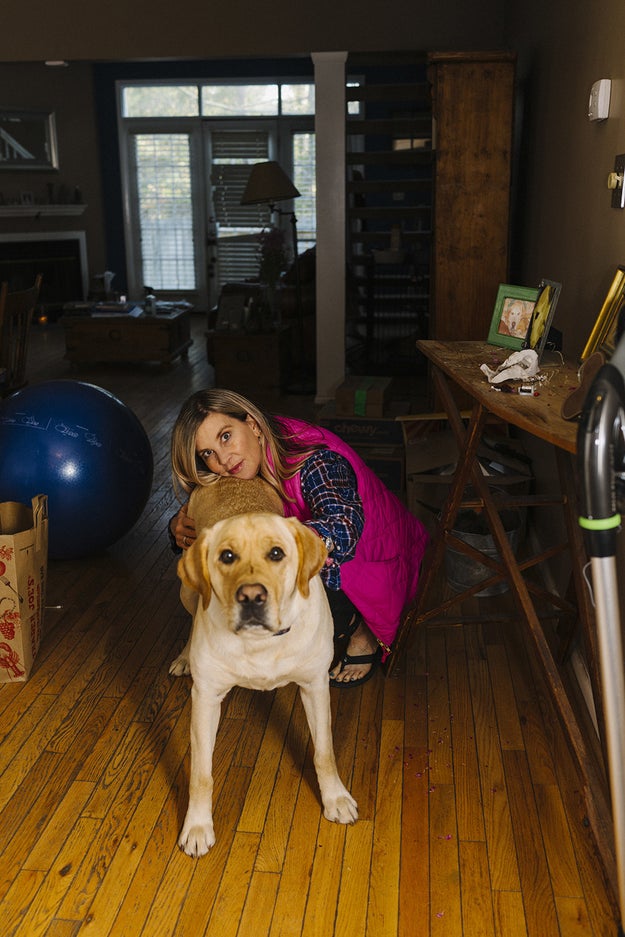
Suri Crowe in Virginia on Thursday, April 19, 2018.

Matt Eich for BuzzFeed News

As Sinclair’s corporate control intensified, some employees at WSET began to quietly worry about the introduction of the company’s now infamous “must-run” clips. The segments, produced by the parent company, included a “Terrorism Alert Desk” rounding up terror incidents from around the globe, as well as political diatribes from former Trump official Boris Epshteyn. Inside the newsroom, employees who viewed the segments negatively mostly kept quiet. “We would see a must-run, and we would all glance at each other, but that was about it,” said a former staffer. Some reporters in the field chafed at the must-runs not for political reasons, but because it meant they had less time for their own stories.

The segments also exposed a generational divide. “Half of the newsroom was pretty vocal about drinking the Kool-Aid, and they were all the old people,” one of the former employees said. “I think the general consensus and attitude was that they were probably doing it because they liked their jobs. It was scary to watch.”

Earlier this month, Sinclair’s must-runs came under sharp national scrutiny when Deadspin stitched together a video showing dozens of local TV anchors delivering the same speech about media bias in unison. Critics said that the anchors looked like hostages. Journalism schools sent a letter to Sinclair blasting the video. The clip ricocheted around Hollywood, with liberal actor Amy Schumer canceling a planned interview with Sinclair’s DC station. Former Sinclair employees began speaking out — like one reporter in Florida who told Bloomberg he was ordered to conduct politically tinted “man on the street” interviews.

As the media storm intensified, Sinclair battled back. David Smith, Sinclair’s chair, emailed the New York Times that the must-runs were similar to stations running late-night shows from their affiliated network. The company then ran a banner on the websites of every one of its local stations linking to a YouTube video attacking CNN’s “hypocritical” coverage of the incident.

Despite her negative performance review, Crowe remained in her contract at WSET, and in April 2016, she won a Virginias Associated Press Broadcasters award for coverage of animal inspection violations at a roadside zoo. Crowe’s reporter “reel” from her time at WSET compiles some of her stories, from local weather events to political rallies to an investigation on why a local shelter euthanized a dog set for adoption.

Stevens, the news director from the Allbritton and early Sinclair era, joined Liberty University when he left WSET in 2016. But Crowe continued to feud with the new management, including news director Scott Nichols.

Crowe told BuzzFeed News that she pitched a story about the rise of white supremacists in the area who she said she could get on camera for an interview. According to Crowe, Nichols told her that he didn’t see the news value. The piece would have been prescient, Crowe now says, because she offered the idea well before the race-fueled clashes in nearby Charlottesville that would bring national attention to the region.

Nichols did not return a request for comment for this story.

Crowe also claimed she was called off from digging into potential Title IX issues at Liberty University, a topic that was later covered at length in the local media. Crowe attributed the decision to close ties between WSET at the evangelical university, which is led by Jerry Falwell Jr., an ardent Trump supporter.

“We leave Liberty alone,” said another former employee. “It’s like Liberty is untouchable.”

Stevens disagreed. “When I was in that newsroom, we treated Liberty the same as any other institution, sometimes drawing the ire of university leadership. We were tough but fair and we covered a lot of Liberty news,” he said. “In fact, in my current position at Liberty, I’ve noticed no drop-off in interest by WSET in Liberty-related stories of all stripes.”

By early 2017, Crowe said she believed that Sinclair executives were seeking to build a case against her — in writing — so that they could eventually force her out of the company.

On Jan. 24, Nichols emailed Crowe to reprimand her for two tweets posted on her personal Twitter account that were in violation of Sinclair’s social media policy. “With record unemployment, job creation, lower crime rates and booming stock markets — what America is @realDonaldTrump seeing?” Crowe quote-tweeted along with a Vanity Fair article about Trump’s “dark, raw, partisan” inaugural speech, which depicted an America in crisis. Crowe also quote-tweeted President Obama’s outgoing farewell tweet with three heart emojis.

“Someone could interpret your tweets and re-tweets as media bias because a majority of them are anti-Trump and pro-Obama,” Nichols wrote in an email. “It’s OK to hold those in power accountable. But your tweets and re-tweets should cover a wide breadth of topics, not just point out what some say President Trump is doing wrong. You say you are not biased, and I appreciate that. But you don’t want to have the ‘appearance’ of bias either.”

Crowe responded in an email: “I do tweet on a wide range of topics — I also put hearts next to a social media post regarding the Bushes recovering — am I to understand one positive for the GOP is okay — but certainly not for the other side?”

"What was I supposed to do? I couldn’t outright quit because I was in a contract."

On her social media accounts — particularly since she left the news business — Crowe frequently posts and retweets negative comments about the president and Republicans and in favor of liberal causes. Her politics are no secret. Crowe told BuzzFeed News that she recognizes by coming forward, critics will point to her personal beliefs, but she said that as a reporter her opinions were separate from her work. “People will say, ‘She’s so obviously liberal, she hates Trump, loves Obama,’” Crowe said. “This is the thing. I have never been accused of imbalanced reporting in my effing life until I got to that station.”

“Suri is a good journalist,” said one of her former colleagues. “It wasn't like she was trying to go out for the left. It boiled down to the corporate [structure] that we were under and also our area, where management is just thinking, ‘That's not going to fly here.’”

On Feb. 24 of last year, Nichols sent Crowe a “last chance agreement.”

“Certain aspects of your job performance have been unsatisfactory,” he wrote. Nichols reprimanded Crowe for an incident earlier that month where Crowe called animal control on a family while shooting a story about them. (Crowe said that she filed an anonymous tip because she viewed the situation as dangerous.) Nichols wrote that Crowe had left work early and also brought up incidents of “your apparent bias in your social media accounts.”

“What they were doing is manufacturing incidents to target me. What was I supposed to do? I couldn’t outright quit because I was in a contract,” she said. Crowe had wanted to leave for some time, she said, but feared owing the company money or being blackballed from other stations for breaking an agreement.

Toward the end of the contract, Crowe said she was whisked into a room and told that the company had exercised an escape hatch to force her out early. It was her last day at Sinclair and, as it happened, her last day in the news business. She now works in the health and fitness industry.

“I believe the ire at me was politically tainted,” Crowe said. “If they perceived you as a liberal, or someone not going along with that whole credo, then you are done.” ●


Source BuzzFeed - Politics https://ift.tt/2vCHQgM
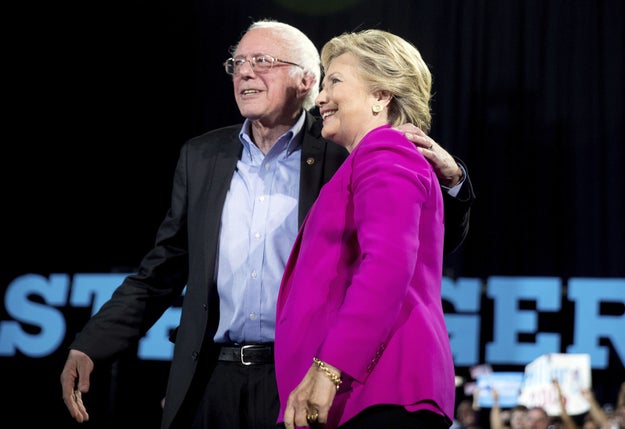
Bernie Forces Ask Clinton And Top Democrats To Recommit To Cutting Superdelegates

Andrew Harnik / AP

A top Bernie Sanders official is asking Democratic leaders, including Hillary Clinton, to sign a draft letter recommitting to vastly shrinking or effectively eliminating the party’s controversial “superdelegates” system — and ultimately changing the presidential nominating process.

The Sanders ally, his former campaign manager, Jeff Weaver, is in talks with Clinton’s team about the letter, and also plans to solicit signatures from House Minority Leader Nancy Pelosi, Senate Minority Leader Chuck Schumer, Democratic National Committee chair Tom Perez, and DNC vice chair Rep. Keith Ellison, according to two people familiar with the undertaking.

The effort to make Democratic primaries more fair — a process that has spanned two years, two committees, and dozens of arcane rules about how to make changes to the rules — is nearing its long-awaited end. Next month, the party’s Rules & Bylaws Committee convenes to begin drafting the final language that DNC members will or will not approve in a vote this summer.

At stake is the future of “superdelegates,” the 700 or so party leaders entitled to cast votes as “unpledged delegates” for the candidate of their choosing.

“We believe that the passage of these reforms is a fundamental and necessary step in re-establishing faith with those who have lost confidence in the Party as a vehicle for change,” reads the draft of the letter, obtained on Friday. “Now is the time to go forward, not backward.”

Weaver declined to comment. A spokesperson for Clinton also declined to comment when asked whether the former Democratic nominee would sign her name to the letter. When contacted, Pelosi and Schumer aides said they hadn’t been aware of Weaver’s letter.

A DNC spokesperson did not respond to a request for comment.

Weaver’s draft letter — meant to lock in public support for shrinking that system — would show Clinton, Sanders, and other party leaders reiterating their commitment to proposals put forward during the 2016 Democratic National Convention. It was there, in Philadelphia, that officials from the two rival campaigns formed the Unity Reform Commission, a 21-member committee tasked with proposing specific changes to rules around delegate allocation, caucuses, and primaries — a set of compromises hashed out by Clinton and Sanders allies ahead of the convention.

Among them was a proposal to effectively reduce superdelegates by about 60%.

Under the existing system for choosing a Democratic nominee, candidates vie for "pledged delegates" by competing in caucuses and primaries, which award delegates based on performance. Later on, at the convention, superdelegates or “unpledged delegates” can vote for however they want. Superdelegates include the 447 members of the DNC; Democratic governors, US senators, and members of Congress; and “distinguished leaders” like former presidents, vice presidents, and party chairs.

The Unity Reform Commission proposal would strip just DNC members of their superdelegate votes during the first and main round of voting at the convention. (In the rare case of a second round of voting, all superdelegates would be unbound, free to support any candidate.)

The superdelegate debate, led by Sanders supporters who felt the system unfairly favored Clinton, has now moved to the DNC’s Rules and Bylaws Committee, where officials put forward a final set of proposed rules changes.

Committee members remain divided on the idea of a 60% reduction: Some, like longtime party leader Leah Daughtry, support eliminating superdelegates altogether on a first ballot convention vote.

Others see superdelegates as a crucial part of the primary system — a safeguard against nominees like President Trump, said one Rules and Bylaws member, Elaine Kamarck, a DNC member who has studied presidential politics for decades.

Kamarck has backed the original Unity Reform Commission proposal, but also made clear that she believes that, in the long term, more so-called “peer review” by veteran party leaders produces stronger presidential nominees. In a forthcoming study for New York University’s law journal, she said, she will propose a number of changes to the nominating system, from an increase in superdelegates to a new pre-primary endorsement process where the party’s top elected officials would meet with the candidates, question their positions, and issue votes of confidence or no-confidence. Candidates who fail to meet a certain threshold would be barred from debates or from a spot on the ballot, depending on how the party decided to structure the system, she said.

“This whole idea runs completely counter to where the public is,” Kamarck admitted, referring to the broad support particularly among Sanders supporters for a reduction in superdelegates. “However, if the Trump presidency crashes and burns and takes the GOP with it, which is not unrealistic, this dialogue will start.”

When the Rules and Bylaws Committee meets next month in Washington, members will also weigh whether changes should be made to the DNC’s rules, or to its charter document — a distinction that will determine the vote threshold needed at a final vote later this year. Rules changes require a simple majority of DNC members. Charter changes, considered to be more permanent, require a two-thirds majority.

LINK: Democrats Are Considering Dropping Superdelegates Altogether

LINK: All You Need To Know About This Weekend's Vote To Change The Democratic 2020 Primary Process


Source BuzzFeed - Politics https://ift.tt/2K7r6Bo

Saturday, April 21, 2018

Trump Kept Saying He Didn't Stay Overnight In Moscow In 2013, According To Comey's Memos. But He Did.

Kevin Lamarque / Reuters

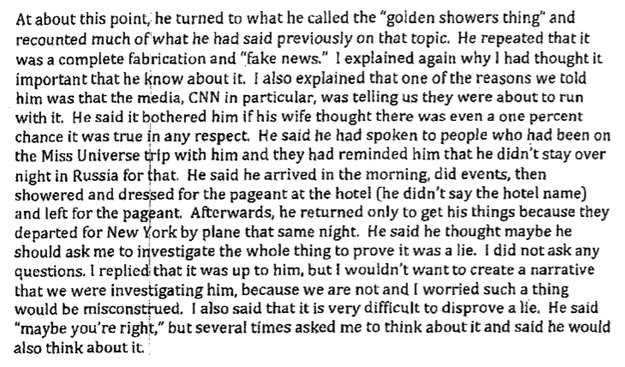
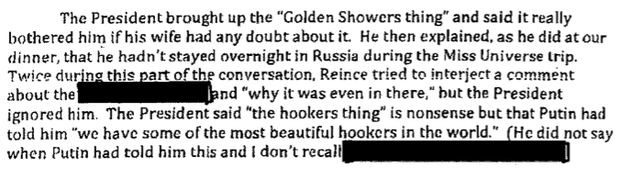
In two of James Comey's memos about his interactions with President Donald Trump, the former FBI director says that Trump made a point to tell him that he didn't stay overnight in Moscow when he was there for the 2013 Miss Universe pageant.

Trump himself, however, said he spent the "weekend" in Moscow surrounding the Saturday evening event — and contemporaneous information about the event (in addition to subsequent reporting) makes clear that Trump spent at least one night, and likely two nights, in Moscow during the trip.

On the Monday morning after returning from Moscow, Trump tweeted to his partner in hosting the pageant in Moscow, Aras Agalarov, that he had enjoyed his weekend there.

So, what is this all about? In Comey's memos, he details that Trump, on two occasions, told the then-FBI director that he didn't spend the night in Moscow in 2013 — part of the president's response to and insistence that claims made in the "Steele dossier" couldn't possibly be true.

The first time Trump made the claim, in Comey's telling, was during a one-on-one dinner between the two men that took place in the Green Room of the White House on Jan. 27, 2017.

The first time Trump made the claim, in Comey's telling, was during a one-on-one dinner between the two men that took place in the Green Room of the White House on Jan. 27, 2017.

Comey wrote that Trump then raised the claim again in the Oval Office a week and a half later, on Feb. 8 — with then-White House chief of staff Reince Priebus in attendance.

Comey wrote that Trump then raised the claim again in the Oval Office a week and a half later, on Feb. 8 — with then-White House chief of staff Reince Priebus in attendance.

What actually happened? Social media posts from that weekend alone show how unbelievable it is that Trump claims he didn't stay overnight.

On Friday, Nov. 8, 2013, Agalarov's son, Emin, posted an Instagram photo of Trump's arrival at Crocus City Hall — the Agalarovs' venue where the pageant was held.

Instagram: @eminofficial

Then, Trump and the Agalarovs went to the Saturday, November 9, 2013, pageant.

Instagram: @agalarovaras

And they attended the after-party.

Instagram: @eminofficial

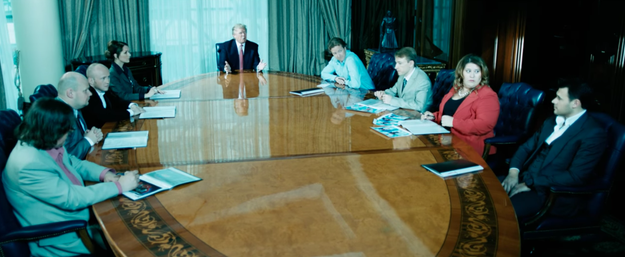
At some point while in Moscow, Trump also helped film a scene for Emin's next video.

At some point while in Moscow, Trump also helped film a scene for Emin's next video.

Via youtu.be


Source BuzzFeed - Politics https://ift.tt/2K0OxMS

Cory Booker Wants The Social Justice Mantle On Marijuana

Eric Thayer / Reuters

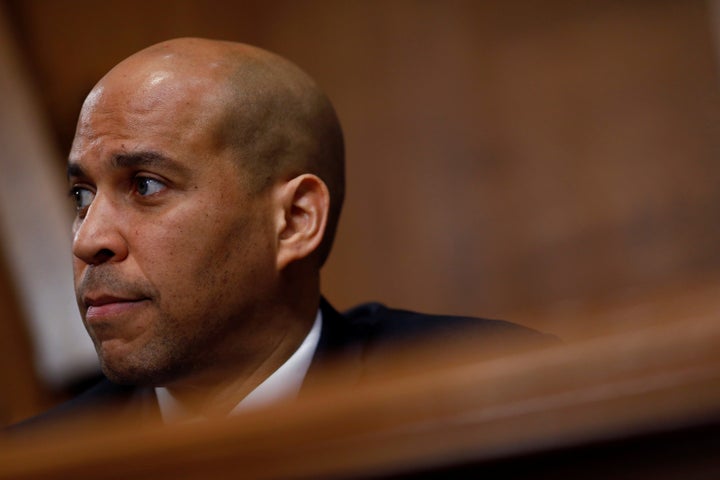
Cory Booker brought his campaign to make legalized marijuana a centerpiece of the movements for social and racial justice to Al Sharpton’s annual convention, a notable venue ahead of the 2020 campaign.

Marijuana, Booker told the assembled group of faith leaders at the National Action Network, has been legal for white people who use without fear of punishment, and that legislative action should center on undoing damage of prohibition, rather than expanding access for investors.

While other speakers — including the president of the NAACP — were warned by Sharpton that they must be brief, Booker seemed to have all of the time he wanted. Booker himself adopted a preacher’s cadence while flanked by Sharpton, and covered a range of topics, putting a social justice lens on issues from climate change to the economy. But if there was a focal point of Booker’s speech, it was the criminal justice system system, which he described as “the biggest cancer on the soul of this county.”

“I hear all these people want to talk about legalizing marijuana,” Booker said in his speech, delivered the day after Senate Democratic Minority Leader Chuck Schumer backed decriminalizing marijuana in an interview with Vice News.

“Well,” the senator went on, “marijuana has been legal for the people of privilege in this country for a long time. Because they don't get arrested. They don't get stopped. There’s nobody stoppin’ and friskin’ on college campuses. Stanford and Harvard and Princeton — there’s a lot of drugs there, but there’s no FBI sting operation. They’re coming into our communities, coming into communities like mine.”

The former Newark mayor — one of several potential presidential candidates who spoke at Sharpton’s conference on Friday — told the crowd that he is the only US senator who “lives in an inner-city community in a majority black city.” Booker has been beating the drum on injustice and inequality for some time on cannabis, and his bill, the Marijuana Justice Act of 2017, represents an advocate’s wish list of reparative action. Though the bill has merited several high profile co-sponsors (e.g. Bernie Sanders), given his prominent role, Schumer’s plans to develop legislation seem poised to attract a potential wider audience in Congress.

The parade of national Democrats at Sharpton’s annual convention included Sens. Bernie Sanders, Kamala Harris, and Elizabeth Warren. But perhaps none of them engaged crowd more than Booker, who laughed, then brushed off a question about whether he felt he had won the day.

Unlike 2007, when the press dubbed the similarly well-attended event the “Sharpton Primary,” the overall frame for the day was less overtly about winning political support inside the room, and more outside-looking. Sharpton emphasized the intersection of the 50th anniversary of the death Dr. Martin Luther King Jr. and Trumpism, a political force he argues is actively working to undo what King fought for.

Asked about powerful Democrats coming forward recently in support of decriminalization, Booker told BuzzFeed News, “As this movement grows it should not just be about access to marijuana, it should be about expunging records, reinvesting in communities that have been disproportionately impacted by marijuana prohibition and restorative justice and it’s just not right now.”

Booker told reporters Schumer’s announcement on Thursday was an “extraordinary” move, but referred to an Instagram post in which he said, “As states are moving to legalize marijuana, most are not expunging the records of the thousands of people who have criminal convictions for marijuana possession, use or distribution crimes.”

LINK: The Biggest Names In Democratic Politics Are Just Straight-Up Calling For Legalized Marijuana

LINK: Jeff Sessions Is Making Congress Mad With His Pot Policy, And It May Backfire


Source BuzzFeed - Politics https://ift.tt/2HFNbc7

Friday, April 20, 2018

An explainer on how to sign in with your cable provider to watch CNN in our iOS app.


Source CNN.com - RSS Channel - App Tech Section https://ift.tt/2JdyV7J

The Justice Department Just Sent The Comey Memos To Congress

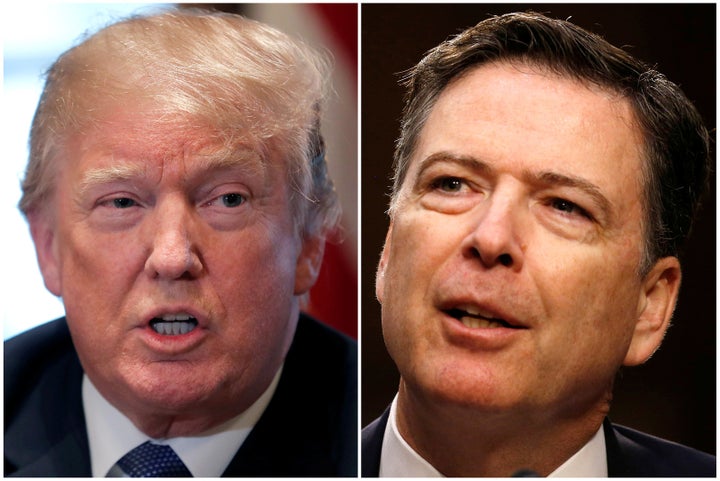
President Donald Trump and James Comey

Carlos Barria / Reuters

The Justice Department has sent copies of former FBI Director James Comey's memos regarding his interactions with President Donald Trump to congressional leaders, the department announced in a letter sent to those leaders on Thursday evening.

Assistant Attorney General Stephen Boyd sent the letter — which contained redacted versions of the memos — on Thursday evening. An unredacted version of the memos, which contain classified information, will be available to members of the relevant committees on Friday, Boyd wrote.

This is a developing story. Please check back at BuzzFeed News for the latest.


Source BuzzFeed - Politics https://ift.tt/2HMLGWZ

The Top Democrat In The Senate Now Supports Decriminalizing Marijuana

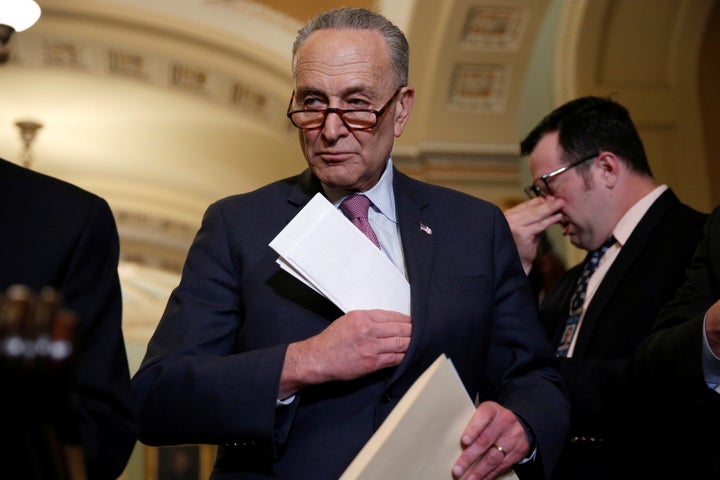
Senate Minority Leader Chuck Schumer

Joshua Roberts / Reuters

Senator Chuck Schumer now supports decriminalizing marijuana.

Schumer, the Senate's top Democrat, has crafted a broad outline for a bill that includes "removing marijuana from the list of scheduled substances," and boosting minority- and women-owned marijuana businesses, according to a copy of the outline Schumer's office shared with BuzzFeed News. Schumer also plans to include in legislation an investment "to better understand the effects of THC on the brain and the efficacy of medicinal marijuana for specific ailments."

Schumer is working on the legislation himself, his office said, and is not currently in the process of courting co-sponsors but has spoken broadly about the outline with other senators. Schumer first made the announcement that he supports decriminalizing marijuana in an interview with Vice News.

Schumer's support of decriminalizing the drug will be a huge boost to the national movement to legalize marijuana, which has been picking up steam among both parties. Just last week, John Boehner, the former Republican House majority leader, also announced his support for de-scheduling marijuana, saying he was joining the board of a cannabis company.

"With this announcement, Senator Schumer has effectively made it clear that a legislative priority for the Democratic Party is to end the federal prohibition of marijuana," said Justin Strekal, political director at National Organization for the Reform of Marijuana Laws.

There's already a marijuana bill in the Senate: Sen. Cory Booker's Marijuana Justice Act, which comes with a litany of other provisions around criminal and racial justice, including reparations for people harmed by the drug war.

But that bill has attracted just two Democratic co-sponsors. A more moderate version by Schumer would be more likely to pick up steam in the Senate, even potentially attracting bipartisan support.

In New York, Schumer's home state, the actress Cynthia Nixon is running an insurgent primary campaign against Gov. Andrew Cuomo, the incumbent, based in part on her support for legalizing marijuana. She's using Cuomo's track record of opposition to pot, which he once called a "gateway drug," as a weapon against him.

Kate Nocera contributed to this report.


Source BuzzFeed - Politics https://ift.tt/2Hd7Q3O

Thursday, April 19, 2018

Minnesota Is The Biggest Battleground Of The Midterms — And Maybe The Lone Bright Spot For Republicans

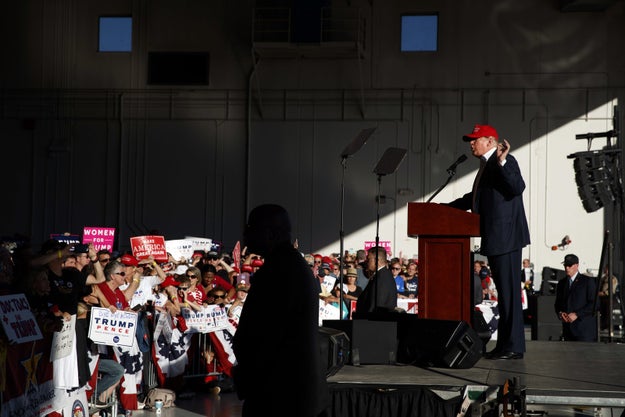
Trump campaigns in Minnesota before Election Day 2016.

Evan Vucci / AP

Minnesota is the bleeding edge of how Donald Trump is remaking Midwestern politics — and positioned to be the most competitive battleground state in America for this year’s midterm elections.

Four of the nation’s most competitive House races are in Minnesota. Both Senate seats are on the ballot. A former presidential candidate is running for governor. The state offers a clear look at how voting patterns in rural and suburban Midwestern areas are rapidly changing — just two years after Trump nearly became the first Republican presidential candidate to win there since 1972.

“We truly are the epicenter of the 2018 elections, which is both exciting and terrifying at the same time,” said Ken Martin, chair of the Minnesota Democratic-Farmer-Labor Party.

The terrifying part for Democrats is that Minnesota appears to be an anomaly right now. Republicans in other states are at risk of being dragged down by an unpopular president and a national electoral climate that’s expected to be brutal for their party. But Trump’s numbers have not cratered in Minnesota like they have elsewhere. And Republicans have a real chance to flip two House seats in rural parts of the state — the only two Democratic-held seats in the country that the election forecasters at the Cook Political Report considers tossups.

National organizations are planning major investments. The Congressional Leadership Fund, an outside spending group aligned with Speaker Paul Ryan, already has one field office in the state, with another coming soon. And the Republican Governors Association, encouraged by former governor Tim Pawlenty’s candidacy, recently reserved $2.3 million in October and November television advertising in Minnesota. The early buy is a hedge against crowded airwaves and inflated ad rates this fall.

“By booking this ad reservation ahead of time, the RGA will save considerable resources,” said Jon Thompson, an RGA spokesperson. “With a competitive gubernatorial election, and two targeted Senate races, a massive amount of money could pour into Minnesota.”

Republican Tim Pawlenty, the former governor of Minnesota, is running for his old job this year.

Marcus Ingram / Getty Images

Minnesota bucked the trend of its neighbors in 2016: Iowa, Michigan, and Wisconsin all went red, leaving it as one of the last industrial Midwest states standing for Democrats. But that slim, 1.5 point victory for Hillary Clinton concealed problems. A state party that has historically prided itself in a broad base of rural voters — it’s called the Democratic-Farmer-Labor Party, after all — is on the precipice of losing them, becoming a party made up solely of the Twin Cities and upscale suburbs.

Take the so-called "Iron Range" mining country, a longtime Democratic stronghold covering the 8th Congressional District. The area’s deep union roots once made it the heart of the Democratic-Farmer-Labor Party. In 2016, a big chunk of the region backed Trump — Itasca County, for instance, voted Republican for the first time since Herbert Hoover. Democratic Rep. Rick Nolan survived, though, winning reelection by less than a percentage point. But Nolan announced his retirement this year, and a top Democratic candidate to succeed him dropped out of the race Wednesday.

Nolan’s seat is one of the state’s four tossups. Another belongs to Rep. Tim Walz, whose bid for the Democratic gubernatorial nomination puts his party in deeper jeopardy of losing the Minnesota 1st, which blankets the southern part of the state. Walz’s margin of victory, like Nolan’s in the 8th, was less than 1%. (Trump won both districts by 15 points.)

“The Nolan and Walz open seats are two of the best Republican pickup opportunities in the country, and the Congressional Leadership Fund plans to play there aggressively,” Corry Bliss, executive director of the Ryan-aligned political organization, told BuzzFeed News.

But Republicans also must play aggressively in Minnesota’s 2nd and 3rd Districts, which encompass the Minneapolis and St. Paul suburbs and are filled with the kinds of affluent voters Democrats need to offset any losses in the rural, farther-flung parts of the state. Both districts re-elected Republicans to the House in 2016. Jason Lewis narrowly won, and Clinton narrowly lost, in the 2nd. Erik Paulsen and Clinton both won comfortably in the 3rd.

CLF has been on the ground in Paulsen’s district since last year and soon will open an office in Nolan’s. But Democrats and Republicans acknowledge the results from the four competitive House districts could be a wash — each party could end up with two seats, just like before — when it comes to determining control of a House that’s very much in play.

Meanwhile, on the Senate level, Democratic Sen. Amy Klobuchar, who has an astronomically high approval rating and is seen as a safe incumbent, is up for reelection this year. Al Franken’s resignation — following accusations of sexual misconduct — has put Minnesota’s other Senate seat in play. Democrats are confident about their chances there, hoping that Klobuchar will pull Tina Smith, Franken’s interim successor and the state’s former lieutenant governor, over the finish line. But they are nervous about the governor's race because of Pawlenty, whose name recognition dwarfs that of any of the Democratic challengers, including Walz, the current frontrunner.

Pawlenty, the last Republican to serve as Minnesota’s governor, has a national profile and donor base — “the pay-attention factor,” said Jennifer Carnahan, chair of the state’s Republican Party — thanks to his unsuccessful run for president six years ago. Much like Democrats are counting on Klobuchar to carry Smith, Republicans expect Pawlenty to have coattails for their Senate and down-ballot candidates.

"A lot of [the national Democratic Party’s] messaging has been anti-Trump, but that’s not a winning strategy in this state."

“Republicans haven't had much luck in statewide races over the last decade in part because we haven't recruited candidates who could raise the necessary resources and be competitive statewide,” said Alex Conant, a national Republican strategist with experience in Minnesota politics and a veteran of Pawlenty’s presidential campaign. “Pawlenty can do both. Down-ballot candidates in Minnesota are breathing easier with Pawlenty in the race. Having a competitive, well-funded Republican candidate for governor will help with turnout everywhere.”

The extent to which Trump can be a factor in any of these races, whether at the statewide or House district level, is uncertain. Many Democrats plan to limit how much they criticize the president, admitting his numbers in the state — which, according to a poll earlier this year conducted by the Minneapolis Star Tribune, have remained steady — are a source of anxiety. Trump’s voters are “pretty much solid behind him, at least in Minnesota — they’re still sticking with him,” said Martin, the state DFL chair. “A lot of [the national Democratic Party’s] messaging has been anti-Trump, but that’s not a winning strategy in this state.”

Message-testing that tied Pawlenty to Trump, for example, didn't help Democrats, one strategist in the state said. Instead, it was messages about Pawlenty's cuts to the state budget during his first time in office, particularly education, that resonated with voters, the Democrat said.

Carnahan, the Republican state chair, believes Trump would be an asset on the campaign trail.

“I drive around this state every day, and I talk to people on the ground — not just Republicans, but randomly, at the gas station and the grocery store — and they’re enthused about President Trump,” Carnahan said. “My whole pitch is that Democrats say there’s a blue wave, but there’s no blue wave in Minnesota. What we have in Minnesota is a red tsunami.”

LINK: It's A Former NFL Player Vs. A Donald Trump Acolyte In A Battle For The Soul Of The Republican Party In Ohio

LINK: A Liberal Judge Won In Wisconsin — And That's A Bad Sign For Republicans This Year


Source BuzzFeed - Politics https://ift.tt/2vrwk7Q

Michael Cohen Drops Lawsuits Against BuzzFeed And Fusion GPS

Shannon Stapleton / Reuters

Donald Trump's personal attorney has dropped a defamation lawsuit against BuzzFeed over the publication of a "dossier" alleging ties between the Trump campaign and Russia.

Michael Cohen on Wednesday discontinued the lawsuit against BuzzFeed, which published the full report last year, and Fusion GPS, a private intelligence firm connected to the dossier. Cohen's decision comes a week after the FBI raided his office and seized documents, putting him in the crosshairs of a criminal investigation.

"The decision to voluntarily discontinue these cases was a difficult one," Cohen's attorney David Schwartz told BuzzFeed News. "We believe the defendants defamed my client, and vindicating Mr. Cohen’s rights was — and still remains — important. But given the events that have unfolded, and the time, attention, and resources needed to prosecute these matters, we have dismissed the matters, despite their merits."

Schwartz did not return a request for comment.

Cohen alleged that the dossier falsely claimed he traveled to Prague for a secret meeting with Russian agents — which he has denied.

“The lawsuits against BuzzFeed over the Steele dossier have never been about the merits of our decision to publish it," BuzzFeed News spokesperson Matt Mittenthal said in a statement. "If there's one thing Democrats and Republicans agree on today, it's that the dossier was an important part of the government's investigation into potential collusion between the Trump Campaign and Russia. Its interest to the public is, and always has been, obvious. Today's news suggests that Donald Trump's personal lawyer no longer thinks an attack on the free press is worth his time."


Source BuzzFeed - Politics https://ift.tt/2JUHc1r

Wednesday, April 18, 2018

Unions Are Trying To Fix The #MeToo Problem On Political Campaigns

Rainmaker Photo / Rainmaker Photo/MediaPunch/MediaPunch/IPx

Say you work on a political campaign.

Say a colleague on that campaign is harassing you, making your daily work environment untenable. Do you file a complaint? Do you even know where to begin? On this campaign, as on most campaigns, there is no human resources department. Now say the colleague harassing you is your boss. Do you feel comfortable going over his head, knowing that you’d break rank in the campaign’s strict hierarchy? Say the colleague is actually the campaign manager. Do you go to another subordinate? To the candidate? Do you fear, even before figuring out how to file a complaint, that stepping forward might harm your career, might label you a “problematic” staffer? Do you worry that, if word ever got out, the complaint might harm the candidate, the cause that drew you to the campaign in the first place? And, in the end, do you tell yourself that it’s better to say nothing, because in political campaigns, you learn early on that, if staffers have one golden rule, it is to never, ever become the story — to keep your head down and just do the work?

Veteran operatives know that, far too often, these questions and fears can easily discourage staffers from reporting sexual harassment and misconduct. The singular culture of campaigns — the long hours, the close relationships, the power dynamics, the fear of being blackballed — has made electoral politics a particularly urgent and complex battleground in the #MeToo movement.

Ahead of the 2018 election, one group of Democrats is proposing a new solution: unionize.

The Campaign Workers Guild, a progressive group that has helped staffers unionize on 12 campaigns and at one consulting firm, has positioned collective bargaining agreements as a roadmap for operatives trying to better navigate issues of workplace misconduct, establishing detailed provisions around the reporting process and a timeline for reviewing complaints.

The first step? “Just admitting that this does happen,” said Meg Reilly, a former Bernie Sanders campaign staffer who now serves as the vice president of CWG, the new guild. “Progressive campaigns are so, so convinced that they’re immune from any type of sexual harassment or racial discrimination, because we all know phrases like ‘male privilege’ or ‘prison industrial complex,’” Reilly said, describing a view on the left she summarized as, “‘We’re so woke.’”

“Don't think that just because you're working for a Bernie-like candidate that those same power dynamics don't exist. Sometimes the power dynamics are even stronger because of this idea that it can't happen here — and if you report it, you're threatening the candidate's chances.”

Robyn Swirling, a Democratic campaign operative who founded Works in Progress, a start-up dedicated to to ending sexual and gender-based harassment within progressive-based organizations, worked with CWG on language that could “lower the barriers to reporting.”

“Most people feel, and not wrongly,” Swirling said, “that the campaign they're working on would really rather not have these issues surface, and have everyone stay quiet and everyone keep their heads down and do the work. Because the work is why we're there — and that makes things really, really hard, when you have experienced something, to speak up about it.”

Since its launch last summer, CWG has unionized 11 campaigns across races for county council, attorney general, governor, and Congress, ratifying expansive collective bargaining agreements that cover wages, work hours, benefits, and housing, in addition to harassment and workplace conduct. (CWG officials say they’re in the process of negotiating contracts with around 25 other campaigns and “campaign-adjacent organizations,” such as consulting firms.)

“A sexual harassment policy is something everybody’s wanted,” said Reilly. “It just hasn't been done before in the campaign world.”

The contract language on harassment — present in all of the agreements CWG has helped negotiate — specifies where to file a complaint, identifying multiple people on each campaign, including a CWG union representative and a “mutually agreed upon neutral third party.”

The language also stipulates that a complaint may be filed by the alleged victim of misconduct, or a witness to that misconduct. Once a complaint has been made, a multi-step timeline steers the process that follows: First, CWG is notified of the complaint immediately. The neutral third party then has seven calendar days to issue a report with findings and recommended actions. At that point, both parties have the chance to “appeal” the report. And throughout the process, the CWG language states, the complainant will not be forced to work directly with the accused.

CWG officials admit they’ve struggled with the idea that the “neutral” third party might end up prioritizing the campaign over the complainant. That role has varied across contracts, Reilly said. In some cases, it’s the campaign’s main consultant. In others, it’s the lawyer or treasurer. (On most races, Reilly said, operatives don’t have the budget to hire an outside lawyer.)

The CWG contracts also ask campaigns to hold lengthy interactive harassment trainings, hosted in person or through a live video service such as Google Hangouts.

Since since last fall, when revelations about disgraced film mogul Harvey Weinstein set off a far-sweeping movement around workplace misconduct, harassment, and abuses of power, the political world has contended with its own revelations. Women in politics have come forward against powerful lawmakers. Operatives have shared stories about toxic work environments and abusive bosses. And at least some of the party committees in Washington — the entities that oversee political campaigns across the country — have taken new steps to combat harassment.

At the Democratic Congressional Campaign Committee, the arm of the party tasked with supporting House races, operatives asked campaigns to sign an agreement that, alongside other provisions, would require “a strong written sexual harassment policy” and “extensive online sexual harassment training,” provided by the DCCC through an outside vendor.

The Democratic National Committee has mandated sexual harassment training for all employees, and has encouraged staffers at state parties to take the same training. (A DNC spokesperson said they don’t have the authority legally to mandate training for state parties.)

Officials at the party’s other major committees, the Democratic Governors Association and the Democratic Senatorial Campaign Committee, said they’ve strongly encouraged their campaigns to establish clear policies on harassment.

The DCCC’s Republican counterpart, the National Republican Campaign Committee, has also pushed campaigns to adopt strong harassment policies, providing operatives with a handbook that outlines anti-harassment guidelines and complaint procedures, a spokesman said.

Officials at the three other GOP party committees did not respond to requests for comment.

As Swirling sees it, the steps by Democratic entities are a fine start, but not sufficient. “If you’re not getting specific about what’s required, then you run the risk of people doing this to check a box,” and of policies, she said, “that really just cover the campaign’s ass or the DCCC’s ass.”

What do we do if somebody comes up and says, ‘Somebody on our finance committee grabbed me at a fundraiser?’ Who feels more expendable to that campaign? A 22-year-old, on their first campaign, just trying to staff [the candidate at a fundraiser] — or somebody who's a big enough donor that they're on the finance committee?” Swirling said. “You can't just crib standard anti-harassment policy language from some other organization. We need to think through really specific scenarios that make campaigns different from other workplaces.”

Campaign culture is, as Reilly put, “a petri dish.”


Source BuzzFeed - Politics https://ift.tt/2qEFKIm