Monday, February 26, 2018

Ivanka Trump Said It Was "Inappropriate" To Ask If She Believes Her Father's Accusers

Patrick Semansky / AFP / Getty Images

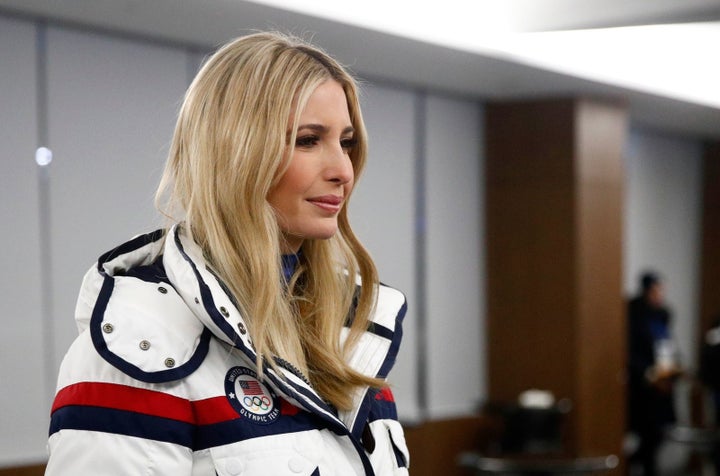
Asked whether she believes the women who have accused her father of sexual misconduct, Ivanka Trump said that she believes the question is "inappropriate" to ask a daughter about a father.

"I think it's an inappropriate question to ask a daughter, if she believes the accusers of her father, when he's affirmatively stated that there's no truth to it," she said in an interview with NBC News that aired Monday . "I don't think that's a question you would ask many other daughters."

Trump, speaking from Pyeongchang, repeated, "I believe my father. I know my father. So, I think I have that right, as a daughter, to believe my father."

At least 16 women have alleged the president sexually harassed them, with some calling for an investigation into his behavior comparable to the investigations launched after some members of congress were accused of sexual misconduct and abuse.

Trump has repeatedly defended her father in the past, stating she believes his denials. She has also said her priorities working in the White House include advocating for women, such as by working to increase paid parental leave.

Earlier in the interview, Trump had answered questions in her capacity as a senior White House adviser, rather than as a daughter — on her role during the Olympics, for example, working with South Korea to put pressure on North Korea.

Trump also stated that "there was no collusion" with Russia during her father's 2016 campaign and that the administration "believes that Mueller will do his work" as special counsel for the investigation into foreign interference. She said that she has not been interviewed by Mueller.

Trump concluded the interview in an official capacity as well, weighing in on education and job creation.

"We need to ensure that the skills being taught in our classrooms and the skills being taught to the American workers align with the jobs that are in demand in the modern economy," she said.

"Let’s Try Round Two": Three Women Who Accused Trump Of Sexual Misconduct Speak Out Again

Watching Harvey Weinstein Fall, Trump's Accusers Feel Frustrated


Source BuzzFeed - Politics http://ift.tt/2otXF3m

The New No. 3 Person At DOJ Is Only In The Role On A Temporary Basis. The Same Is True Of Many Offices He Oversees.

Chip Somodevilla / Getty Images

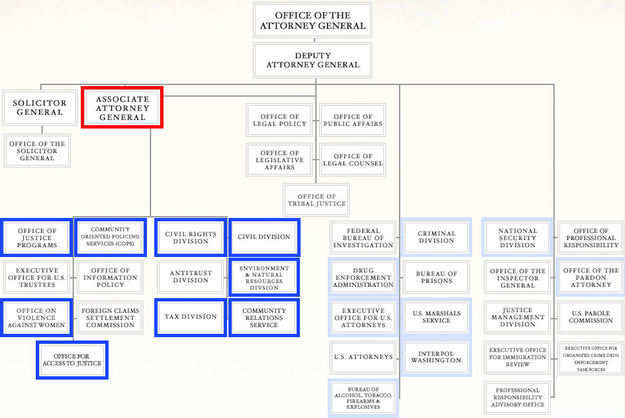
WASHINGTON — More than 13 months into the Trump administration, the Justice Department is now officially without its Senate-confirmed No. 3 in charge — a department where nine of the divisions or offices that reported to former Associate Attorney General Rachel Brand also lack a permanent leader.

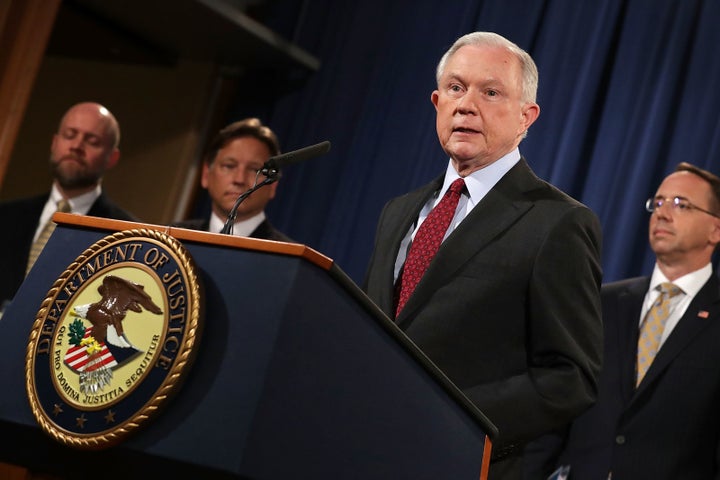
Much attention over Brand’s departure has focused on the order of succession at the Justice Department — a recurring question given President Trump’s repeated lashing out at both Attorney General Sessions and Deputy Attorney General Rod Rosenstein, who oversees the special counsel’s Russia investigation.

Within the department itself, however, there is another issue that Brand leaving her job highlights: There are very few people serving in “permanent” roles in the Justice Department.

Brand — who oversaw a significant part of the Justice Department’s portfolio and had served in the Justice Department for several years of the George W. Bush administration — was confirmed by the Senate and seen as helping provide day-to-day stability in the department. With Brand out, Acting Associate Attorney General Jesse Panuccio, who joined the Justice Department for the first time a month into the Trump administration, has taken over her responsibilities for the time being.

Four of the five legal divisions Brand oversaw lack their own Senate-confirmed leader, a multiplying effect on her departure, and one that is echoed in the the offices that reported to Brand as well. That includes the Tax Division, amid significant changes to the US tax code passed into law by the Republican Congress last year, and the Civil Division, responsible for representing the president and other federal officials in many lawsuits filed against the administration.

A Justice Department spokesperson declined to comment on the issue.

Former Justice Department officials tell BuzzFeed News say the situation isn’t a dramatic one legally. Strong acting heads, who are widely respected, sometimes still can have great influence, of course. And some components have not had a Senate-confirmed leader for several years, including the Civil Rights Division (2013) or the Office on Violence Against Women (2012).

But in a day-to-day interactions, people serving in acting roles understandably can have difficulties asserting themselves or their office’s priorities — particularly outside of their agency — in political and even policy discussions. And with fewer people in permanent roles, the Trump administration lacks the stability for good government, or for advancing an actual agenda, more than a year into the presidency.

This topic of vacancies at Justice is not new — NPR, the Washington Post, and Above the Law all wrote about the issue in the opening weeks of 2018, before Brand announced her departure. But Brand's departure adds a new importance to the wide breadth of vacancies in offices that reported to her.

For any administration, the first years are often the most productive in terms of advancing their agenda — and the continued slow pace of the Trump administration in filling roles with permanent leadership reflects the lack of a fully realized Trump administration and, in some cases here, an apparent disinterest in advancing some of the previously established functions of the department.

An acting assistant attorney general oversees the Civil Division, Civil Rights Division, and Environment and Natural Resources Division (ENRD) currently. The Tax Division is being helmed by the principal deputy assistant attorney general — a consequence of there not yet even being a nominee for the position.

There are pending nominations for the three legal divisions with "acting" heads, at various stages in the Senate process. Eric Dreiband, Trump’s nominee to run the Civil Rights Division, and Jeffrey Bossert Clark, Trump’s ENRD nominee, are two of the three Justice Department nominations awaiting floor action in the Senate — along with Criminal Division nominee Brian Benczkowski. Senate Majority Leader Mitch McConnell has not yet taken action to consider their nominations, however, focusing instead primarily on getting judicial nominees confirmed. Trump’s nominee to head the Civil Division, Jody Hunt, was only sent to the Senate initially in December after several months’ delay and, as a result, is much less far along: He is yet to receive a hearing in the Senate Judiciary Committee.

In all, of the legal divisions that reported to Brand, Assistant Attorney General Makan Delrahim, running the Antitrust Division, is the only Senate-confirmed legal division head in place.

BuzzFeed / Justice Department / Via justice.gov

Within the offices that report to the associate attorney general, the situation is more stark.

Trump has not even nominated leaders for the Community Relations Service, Office of Justice Programs, or Office on Violence Against Women. (Given that the department’s budget proposal would eliminate the Community Relations Service, it appears that a nominee is unlikely to be coming anytime soon for that office.) Additionally, and as reported by the New York Times, the new administration has effectively closed the Office for Access to Justice. The Community Oriented Policing Services, or COPS Office, currently has an acting director — even though the leadership of that office is appointed by the attorney general and so doesn’t have to go through the Senate confirmation process.

The only offices that report to the associate attorney general that have permanent heads are the Executive Office for the US Trustees and the Office of Information Policy — and they have been in their roles since the George W. Bush administration.

The final entity overseen by the associate attorney general is the Foreign Claims Settlement Commission. The two part-time commissioners serving currently were nominated by President Obama and both have been serving for several years now.


Source BuzzFeed - Politics http://ift.tt/2ESzdmH

Saturday, February 24, 2018

The Democrats Just Released Their Own Memo About The Russia Investigation. Read It Here.

Democrats released a redacted memo on Saturday that they say rebuts Republican claims that the Justice Department and FBI abused their spying powers in the Russia investigation.

The document, a direct counterpart to a Republican memo released early this month, was written by members of the House Intelligence Committee.

The release comes after President Donald Trump told Democrats they would have to redact the document before it could be made public, delaying it by two weeks.

Democrats argued that they needed to release their 10-page memo to clarify what Rep. Adam Schiff, the top Democrat on the House Intelligence Committee, called “many distortions and inaccuracies” in the Republican memo.

This is a developing story. Check back for updates or follow BuzzFeed News on Twitter.

Read the memo:


Source BuzzFeed - Politics http://ift.tt/2CGC4ZQ

Friday, February 23, 2018

Trump Just Delivered A Speech Transporting Us All Back To 2016

The president broke out his greatest campaign hits and audience members chanted, “Lock her up” at the Conservative Political Action Conference. The Rolling Stones played him off.

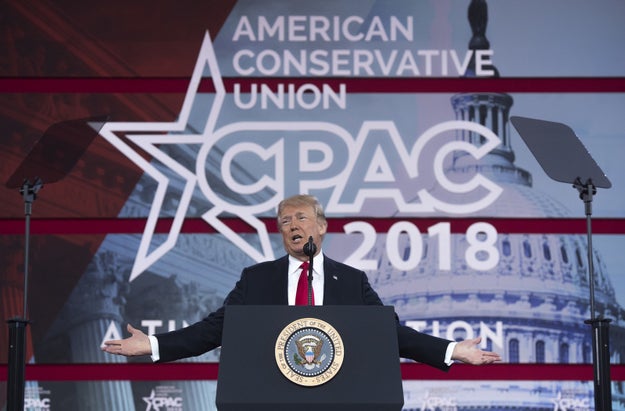
President Trump on Friday gave a speech at CPAC, the annual Conservative Political Action Conference.

President Trump on Friday gave a speech at CPAC, the annual Conservative Political Action Conference.

Saul Loeb / AFP / Getty Images

And a lot of it seemed very... how would you say... familiar.

And a lot of it seemed very... how would you say... familiar.

Chip Somodevilla / Getty Images

Like circa-2016 presidential campaign familiar, when Trump would go off-script, unpredictably ramble and riff at his campaign rallies.

Like circa-2016 presidential campaign familiar, when Trump would go off-script, unpredictably ramble and riff at his campaign rallies.

Trump in Biloxi

Jonathan Bachman / Getty Images

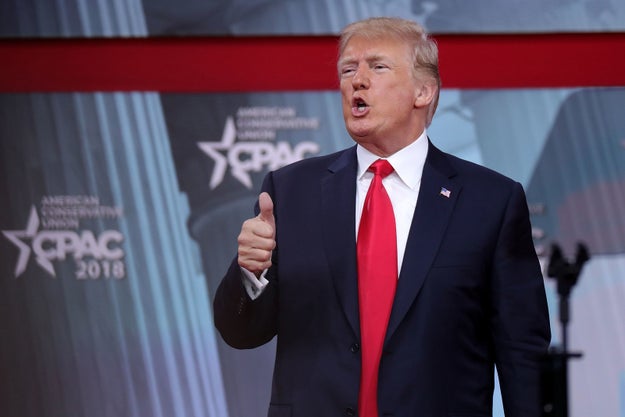
On Friday, Trump entered to Lee Greenwood's "Proud To Be An American."

youtube.com

Just like 2016.

youtube.com

Just like in 2016.

youtube.com

Just like in 2016.

youtube.com

Just like 2016.

youtube.com

Juuust like in 2016.

youtube.com


Source BuzzFeed - Politics http://ift.tt/2CFbWib

The Pentagon’s New Transgender Military Proposal Is In — But It Doesn't Change Anything Yet

Alex Wong / Getty Images

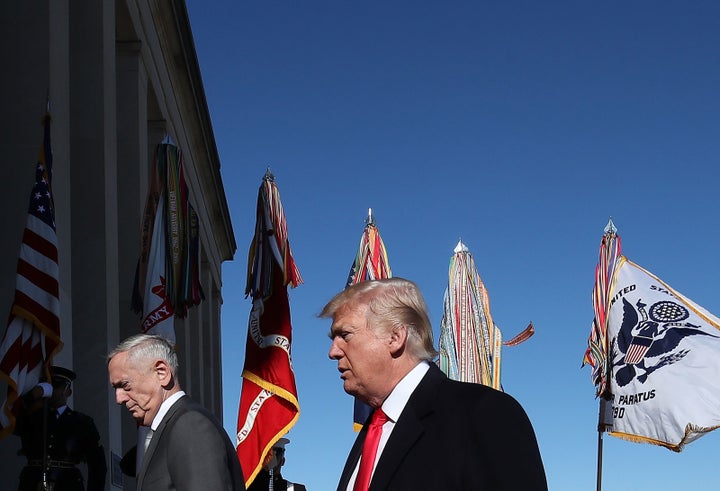
The Pentagon on Friday sent recommendations to the White House about how to handle transgender people in the US military — two days later than had been expected and still leaving most questions unresolved.

President Trump had requested the recommendations in order to provide a roadmap on how to carry out the president’s order last summer to ban transgender service.

"The Secretary of Defense made his recommendations on transgender service members to the White House this morning," Maj. Dave Eastburn, a Pentagon spokesperson, told BuzzFeed News.

But Eastburn did not say what those recommendations were, nor did he confirm a Washington Post report on Thursday that cited two unnamed US officials who said Defense Secretary James Mattis would advise that transgender people remain in the armed forces.

"The recommendations made by the Secretary was a private conversation between he and the White House, so details of that conversation will remain private," Eastburn added.

The announcement may raise bigger immediate questions than it answers: Will Trump actually adopt the recommendations from Sec. Mattis, and if Trump seeks to continue the ban, moreover, can it actually be enforced given that federal courts suspended Trump's underlying transgender service ban months ago?

Absent a comment from the White House confirming Trump will adopt the recommendations by a March 23 deadline, or a courts’ opinions on whether a future policy is legal, those questions are up in the air.

The Justice Department had placed significant stock in this announcement, according to a federal judge in Maryland, which said the department said a new policy would be “disclosed” on Feb. 21 — which was Wednesday.

The Justice Department, according to the judge, also said the new policy would be so different from Trump's previous ban that officials didn’t need to hand over certain documents about its origins.

The Justice Department did not reply to questions from BuzzFeed News about the policy’s whereabouts.

The Justice Department’s greatest challenge in defending the policy, up to now, is that federal courts said it singled out transgender people and would likely be ruled an unconstitutional violation of due process rights under the 5th Amendment.

Given those past setbacks, there has been widespread speculation the Trump administration’s new policy would be designed to avoid legal snags — much the same way Trump issued permutations of the travel ban, each one redrafted to evade challenges that doomed the one before.

The Pentagon on Tuesday announced a new “deploy or out” policy that applies across the military, which could affect up to 286,000 service members who have been non-deployable for a year or more. Those troops would be separated from the military or referred to the disability evaluation system.

It was not immediately clear if — or how — the deployment policy may factor into the administration's defense of the transgender ban.

But critics of transgender troops, including Trump, have raised concerns that transgender service members burden the military because they are undeployable while they recover from gender-transition surgeries and other treatments.

In June 2016, the Obama administration lifted a decades-long ban on transgender service, citing research that found transgender people would not bog down the military.

But Trump reversed that decision, saying on Twitter in July 2017 that transgender people would render the military “burdened with medical costs and disruption.” He made the decision to end their service, he said, “after consultation with my Generals and military experts.”

Trump formalized the policy in a memorandum last August that instructed the Secretary of Defense to provide policy recommendations on Weds, Feb. 21, 2018, on recruitment, retention, and health care.

Questions about the provenance of Trump’s position have received significant scrutiny, since judges have said Trump’s decree did not appear to be based on a legitimate national security interest or stemming from a policy-making process.

As one federal judge wrote in November, “President Trump’s tweets did not emerge from a policy review,” adding, “A capricious, arbitrary, and unqualified tweet of new policy does not trump the methodical and systematic review by military stakeholders.”

BuzzFeed News reported on Tuesday that newly obtained emails cast questions about whether Trump did, in fact, consult with top officials before the July tweets, as he’d claimed. Gen. Joseph Dunford, the chair of the Joint Chiefs of Staff, said in emails on July 27 that Trump’s announcement “was unexpected” and that he intended to say he was “not consulted


Source BuzzFeed - Politics http://ift.tt/2ENG0Oe

"Letting anyone publish anything for free and get rewarded based on the attention that they can drive was -- is a bad concept in itself," says Ev Williams.


Source CNN.com - RSS Channel - App Tech Section http://ift.tt/2Cfb2NE

Facebook Promised Political Advertising Changes After 2016. Now, Campaigns Are Anxiously Waiting For Them.

Robyn Beck / AFP / Getty Images

Campaigns across the country are anxiously awaiting changes to the way they advertise on Facebook, after the platform promised more transparency about and new rules for political advertising.

Though there’s been widespread focus on Russian attempts to influence the 2016 election, traditional campaigns and PACs spent millions and millions of dollars on ads — and even small changes in process or the algorithm could mean big changes for how political campaigns reach people this year.

But the first major primaries of 2018 are less than two weeks away, and Facebook has offered only a broad outline of what to expect and a vague timetable — sometime this summer — for when to expect it.

"We’re all trying to learn exactly what these new disclosures will look like and how they’re going to affect our campaigns,” Ted Peterson, the digital director for the National Republican Congressional Committee, which promotes House candidates, told BuzzFeed News.

Like media publishers, many campaign operatives worry that changes in the Facebook algorithm will make political advertising more difficult — or maybe more expensive. They’re also contemplating what the potential loss of dark social ads might mean for campaigns, which would appear on a candidate’s page as opposed to only being shown to their targeted audience under the new rules.

“I think campaigns are going to have to change some of their tactics if they don’t want their exact messaging to be given away, they may have to change who they’re advertising to and with what messages with the idea that everything is potentially out there and hopefully that dissuades some bad actors,” said a Democratic digital strategist.

Others in the digital field are skeptical if Facebook’s broad strategy for transparency on its ad platform will fix the problems that emerged during the 2016 presidential election.

"To be honest, I'll believe it when I see it,” said Kevin Bingle, who served as digital director on Ohio Gov. John Kasich’s presidential campaign and works with other Republican candidates. “I hope they can figure this all out, but I'm not sure I understand what their goal is here.”

Facebook, which did not respond to requests for comment, is vowing to be more rigorous in verifying advertisers’ identities, in part spurred by the Russian meddling during the last campaign cycle. Rob Goldman, the company’s vice president of ads, said last October that a version of the new system is being tested in Canada. At first, only federal election-related ads will be affected when it launches in the US.

Among the most substantial “election integrity” measures announced last year is a searchable database that will allow all users to track all ads purchased by a particular campaign, including ads only previously seen by a micro-targeted audience. Company officials say the system will shine more light on who is trying to influence political races.

It’s a level of disclosure that, as described, resembles how television ads work: Local TV stations and cable providers keep public records documenting airtime costs for ads that all people viewing a given channel in a given market see.

Some campaign operatives who spoke to BuzzFeed News noted that because this is being done proactively by Facebook and not by federal regulators, the result could be totally different system that’s not as accessible or transparent as the Federal Communications Commission’s public files. But Facebook has said that political advertisers will be required to disclose who they are reaching — how many impressions, which demographics — and how much they are spending.

Digital strategists are waiting for word on how detailed they’ll have to be in their disclosures and how Facebook will present these details — which they say will affect the kinds of ads they run. And many are worried about surrendering the competitive advantages that came from being able to tailor a Facebook ad to a specific kind of voter without rival campaigns knowing the particulars about reach and cost.

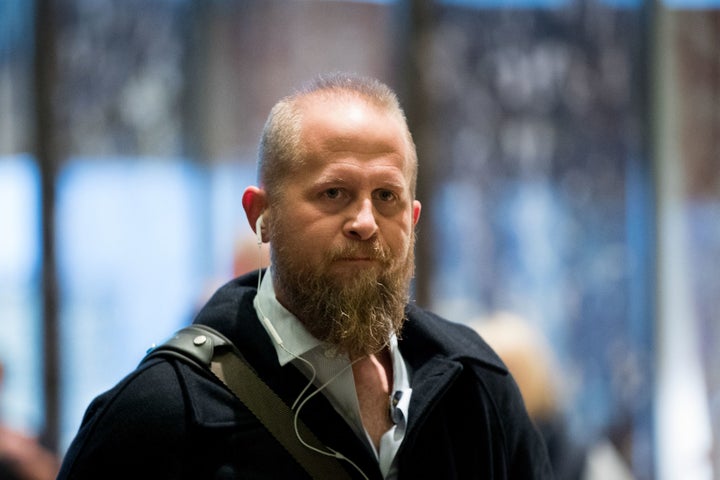
Brad Parscale, the digital director for Donald Trump, who emphasized Facebook above all else last time.

Drew Angerer / Getty Images

Even at a basic level, the disclosures likely will tip off a campaign when a competitor is doing something new — and, as with TV, there will be a rush to match. The transparency in TV “tends to drive up the cost of what the other side is spending, so there’s this really competitive nature,” said Tara McGowan, founder of Lockwood Strategy and a former digital director at Priorities USA, the Democratic super PAC that backed Barack Obama and Hillary Clinton.

Or, as National Republican Senatorial Committee digital director Jon Adams put it: “If I shoot a missile, you shoot a missile.”

But the spending disclosures could work both ways. A campaign that sees a rival spending little or nothing on Facebook is unlikely to invest much money there. "It will be interesting,” Adams said, “to see how they include the spend amount behind the ads — does that help or hurt Facebook? Does that drive more dollars to the platform? Or to television?"

How Facebook displays the spend amount is of particular to interest to digital strategists. Will there be an amount shown for each ad? A cumulative total? What if a campaign produces eight slightly different versions of the same ad for eight different audiences? Will a user be able to see exactly how much a campaign is spending in every specific permutation?

“I think there’s going to be a lot of gaming the system,” said one Republican digital specialist.

This operative and others said that, depending on how deep Facebook makes them go, they might change the way they produce and target content, perhaps including a second state or congressional district to obscure an ad’s actual purpose. Or maybe they will flood the zone with a bunch of ads, each one with a different color background or other distinguishing characteristic to confuse anyone who might be trying to decipher a strategy.

“It’s going to be hard on both sides for Facebook to track every single ad and hold every ad accountable,” McGowan said. “I know they’re probably trying to build that plane as they fly it. I have no idea what the backend looks like but I know there’s an enormous amount of advertising that’s done on the self-serve platform and I’m sure there’ll be some difficulty there to track and regulate every single ad.”

Another Democratic strategist was concerned about how fast Facebook would be in pushing ads through the revamped approval process. “Political campaigns and political advertising is such a fast-paced environment,” said the strategist. “Anything that Facebook would do to slow down the approval process or the creation of ad campaigns — that’s detrimental to campaigns being able to get their message out quickly.”

Bingle, Kasich’s digital consultant, questioned whether Facebook’s new system will work as intended.

"How many people do you think are going to see something super-partisan on Facebook and take the time to visit that organization's page and do homework about what other things they're running and who they're targeting?” Bingle said. “Maybe I'm wrong, but the only people I can see realistically doing that are members of the media and a candidate's opposition. What does this change do to prevent bad information from spreading?"


Source BuzzFeed - Politics http://ift.tt/2CecxeW

Monday, February 19, 2018

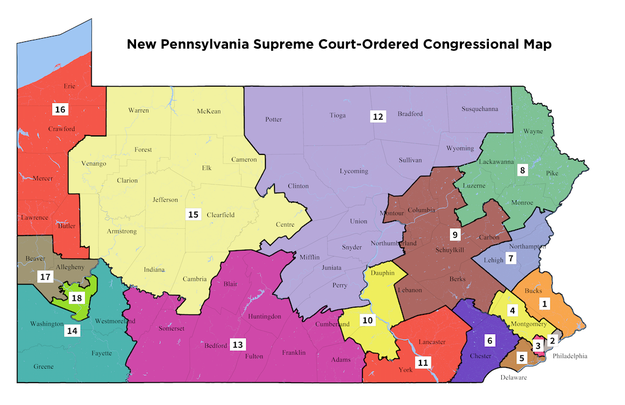
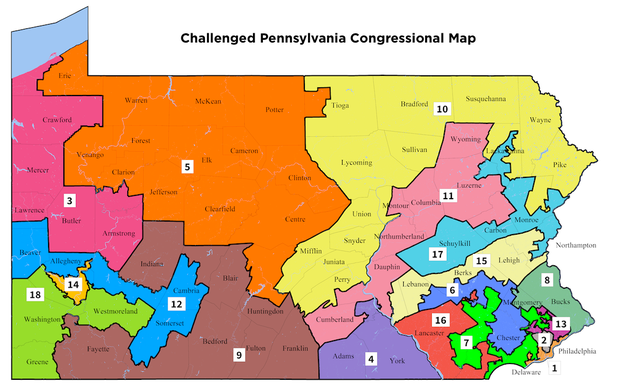
Pennsylvania Supreme Court Issues New Congressional Map For 2018 Elections

The Pennsylvania Supreme Court on Monday afternoon released a new congressional map for use in the 2018 elections — the result of a decision from the court earlier this month that the existing map is an unconstitutional partisan gerrymander under the state's constitution.

Under the challenged map, only 5 of the state's 18 congressional districts are represented by Democrats — despite the fact that registered Democrats outnumber Republicans in the swing state.

Republican lawmakers had asked the US Supreme Court to step in and halt the state court's opinion from going into effect, but Justice Samuel Alito — who oversees requests from Pennsylvania — denied the request.

Pennsylvania Supreme Court

Pennsylvania Supreme Court


Source BuzzFeed - Politics http://ift.tt/2Fg0axk

Saturday, February 17, 2018

Trump's National Security Advisor: Indictment Shows Evidence Of Russian Meddling Is "Incontrovertible"

Ralph Orlowski / Reuters

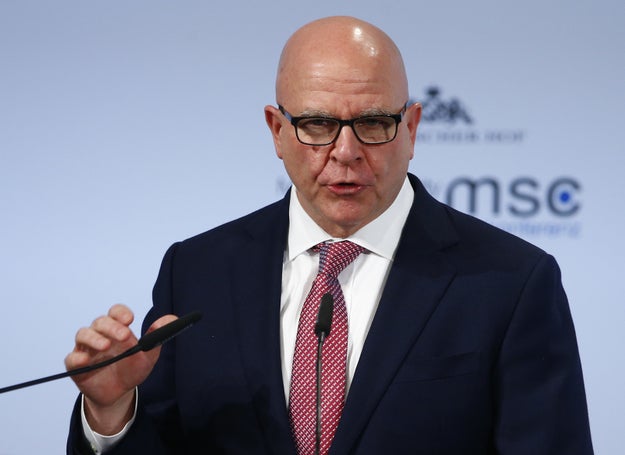
The indictment of 13 Russian citizens and three companies on Friday is "incontrovertible" evidence that Russia interfered in the 2016 US election, National Security Advisor H.R. McMaster said Saturday.

The indictment, prepared by Special Counsel Robert Mueller, claimed that "operations to interfere with the US political system" began in 2014, with Russians using fake social media accounts to target US audiences and "traveling to the United States under false pretenses" to collect intelligence.

Although President Trump has wavered publicly on whether or not Russia interfered, his national security advisor says the indictment shows the US is becoming "more and more adept at tracing the origins of this espionage and subversion."

"As you can see with the FBI indictment, the evidence is now really incontrovertible and available in the public domain," McMaster said at a security conference in Munich.

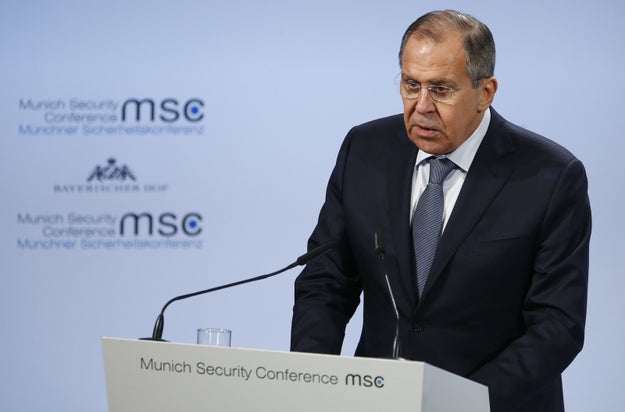
McMaster made his comments shortly after Russian Foreign Minister Sergey Lavrov dismissed the indictment out of hand at the same conference.

"Until we see the facts, everything else is just blabber — I'm sorry for this expression," he said, adding he had "no response" when asked for comment on the allegations.

Ralph Orlowski / Reuters

"You can publish anything, and we see those indictments multiplying, the statements multiplying," he said, arguing that Vice President Mike Pence and other US officials have said no country influenced the election results.

Friday's indictment contained no allegation that the Russian conduct altered the outcome of the election, nor did it allege any American was a "knowing participant." However, Deputy Attorney General Rod Rosenstein told reporters that Mueller's investigation was continuing.

In Washington, however, White House spokesman Raj Shah told Fox News on Friday night that the indictment "proved there was no collusion."

He also said the indictment did not mean that the Russian trolls had favored Trump over Hillary Clinton.

"All of these efforts were about sowing confusion in the electoral process and undermining the next president, not about supporting one candidate over the other." he told Tucker Carlson.

In fact, although the indictment stated that the Russians sought to organize pro- and anti-Trump marches after the election, they worked actively to support him and Sen. Bernie Sanders during the race.

"They engaged in operations primarily intended to communicate derogatory information about Hillary Clinton, to denigrate other candidates such as Ted Cruz and Marco Rubio, and to support Bernie Sanders and then-candidate Donald Trump," the indictment reads.

"Use any opportunity to criticize Hillary and the rest (except Sanders and Trump—we support them)," the Russians were directed, according to the indictment.

In Moscow, Russian officials also doubled down in denying the allegations.

"There are no official claims, there are no proofs for this. That's why they are just children's statements," said the presidential envoy for international information security, Andrei Kutskikh, according to Russian state news agency RIA Novosti.

When asked whether Washington would consider working with the Kremlin on cybersecurity issues, as President Trump proposed on Twitter last year, McMaster joked: "I'm surprised there are any Russian cyber experts available based on how active most of them have been undermining our democracies in the West."

"So I would just say that we would love to have a cyber dialogue when Russia is sincere," he added.

LINK: Federal Grand Jury In Special Counsel Probe Indicts Russian Troll Farm And Individuals For 2016 Election Meddling


Source BuzzFeed - Politics http://ift.tt/2Fa8SgJ

Friday, February 16, 2018

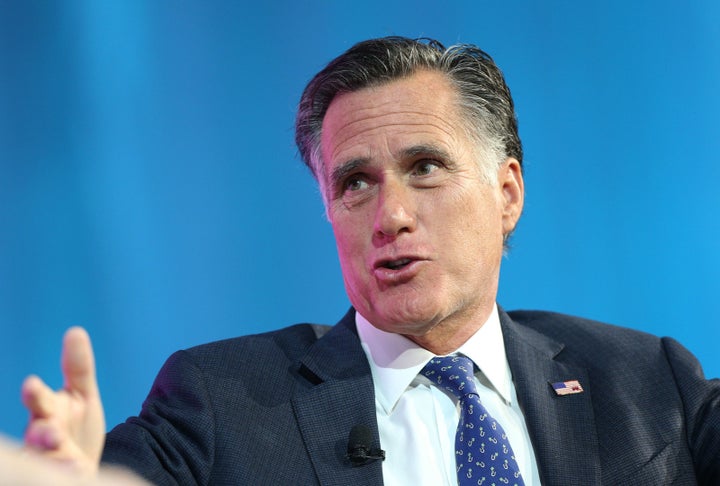
Mitt Romney Has Launched A Senate Bid In Utah — And Some Republicans Are Playing The Carpetbagger Card

George Frey / Getty Images

Mitt Romney, the former governor of Massachusetts, is now a Senate candidate in Utah — and his announcement shows he’s sensitive about being labeled a carpetbagger.

“Utah,” the Republican, says at the beginning of a video he shared Friday morning on social media, “is admired not only for its beauty, but also for the character of its people. Utahns are known for hard work, innovation, and our can-do pioneering spirit. But more than these, we’re known as a people who serve, who care, and who rise to any occasion.”

It goes on like that for more than two minutes. One reporter joked on Twitter that he lost count of how many times Romney said “Utah.” The strategy, telegraphed in recent days is clear and multi-pronged: Romney, who fell short in two previous White House bids and emerged as one of Donald Trump’s fiercest critics, is trying to persuade voters that he is laser-focused on is adopted state and not on the president or the job he’s pined for in the past.

Though on paper this should be a cakewalk — Romney is a hardly a stranger in Utah, and Democrats have little chance of picking up the seat — two prominent Republicans have made an issue of Romney’s Trump-bashing and his relocation West. One of them, state auditor John Dougall, told BuzzFeed News that GOP activists in and outside Utah have been encouraging him after he said this week that he was seriously considering challenging Romney.

“Some of the key things in Utah are that we want to make sure we have a senator who understands Utah issues, and those are clearly different than Massachusetts issues, for instance,” Dougall said Friday morning in a brief telephone interview.

Dougall added that Romney called him Thursday evening to inform him of his imminent announcement, which has been anticipated since Sen. Orrin Hatch made his retirement plans known last month. “I wished him all the best,” Dougall said of Romney.

A Romney spokesperson did not immediately respond to a request for comment.

Dougall declined to say who is encouraging him to run. But he suggested support would come from those concerned about electing someone who would not be aligned with Trump. For weeks on his Facebook page, Dougall has been arguing against a “coronation” of Romney.

“What we need is not somebody who doesn’t like the president,” Dougall told BuzzFeed News. “I think the key thing right now is folks need to know what he stands for.”

After the phone interview, Dougall added via email: “I should have also mentioned that ‘It's clear that Utahns have a very favorable view of Mr Romney. The odds are strongly in his favor.’”

Earlier this week, Utah Republican Party chair Rob Anderson noted Romney’s criticism of Trump and spoke dismissively of his Utah credentials in an interview with the Salt Lake Tribune: “I think he’s keeping out candidates that I think would be a better fit for Utah because, let’s face it, Mitt Romney doesn’t live here, his kids weren’t born here, he doesn’t shop here.”

Anderson later apologized to Romney.

“I’ve no doubt that Mitt Romney satisfies all qualifications to run for Senate,” said Anderson in a Wednesday statement posted on Twitter, “and as chairman of the Utah Republican Party, I will treat all candidates equally to ensure their path to the party nomination is honest and fair.”


Source BuzzFeed - Politics http://ift.tt/2o4fQfY

Federal Grand Jury In Special Counsel Probe Indicts Russian Agency And Individuals For 2016 Election Meddling

Aaron P. Bernstein / Reuters

The Special Counsel's Office announced a federal indictment against the Russian-based Internet Research Agency (IRA), two other Russian entities, and 13 Russian individuals on Friday in relation with the their actions of "interfering with the US political and electoral processes, including the presidential election of 2016."

The Special Counsel's Office, which is investigating Russian interference in the election, provided the following statement:

A federal grand jury in the District of Columbia returned an indictment on Feb. 16, 2018, against 13 Russian nationals and three Russian entities accused of violating U.S. criminal laws in order to interfere with U.S. elections and political processes. The indictment charges all of the defendants with conspiracy to defraud the United States, three defendants with conspiracy to commit wire fraud and bank fraud, and five defendants with aggravated identity theft.

Beginning in 2014, according to the indictment, the IRA began "operations to interfere with the US political system," including by "creating false US personas" to operate "social media pages and groups designed to attract US audiences" and "traveling to the United States under false pretenses for the purpose of collecting intelligence to inform Defendants' operations."

By mid-2016, the operations, according to the indictment "included supporting the presidential campaign of then-candidate Donald J. Trump ("Trump Campaign") and disparaging Hillary Clinton." Specifically, "Some Defendants, posing as US persons and without revealing their Russian association, communicated with unwitting individuals associated with the Trump Campaign and with other political activists to seek to coordinate political activities."

At a news conference on Friday afternoon, Deputy Attorney General Rod Rosenstein, who is overseeing the special counsel's work due to Attorney General Jeff Sessions' recusal, announced the indictment sought by Mueller — laying out the alleged social media efforts and the alleged fraudulent ways in which the effort was organized and implemented. He said the defendants had characterized their activities as "information warfare against the United States, with the stated goal of spreading distrust towards the candidates and the political system in general."

The indictment charges the IRA and others with a conspiracy to defraud the United States. Rosenstein specifically noted how the efforts included efforts to defraud the Federal Election Commission, Justice Department, and State Department. The additional charges include conspiracy to commit wire fraud and bank fraud, as well as several counts alleging identity theft.

Rosenstein said on Friday that there were no allegations in the indictment "that any American was a knowing participant in this illegal activity" — he said the Russian nationals charged took "extraordinary steps" to make it appear that they were ordinary activists — or that the alleged criminal acts had "any effect on the outcome of the election."

"This indictment serves as a reminder that people are not always who they appear to be on the internet," Rosenstein said.

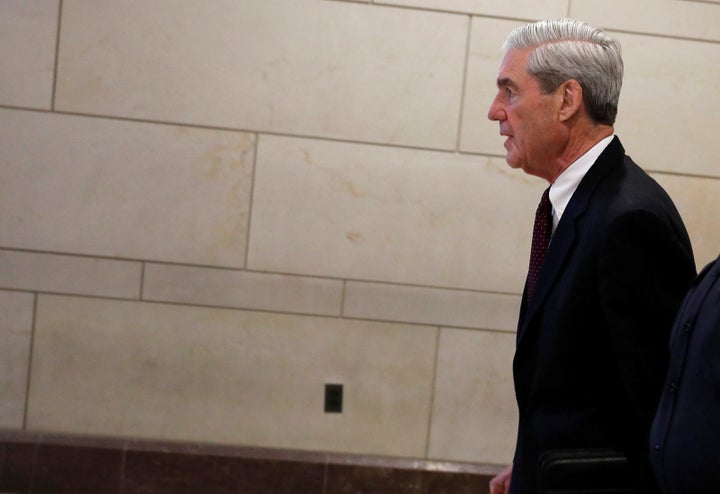
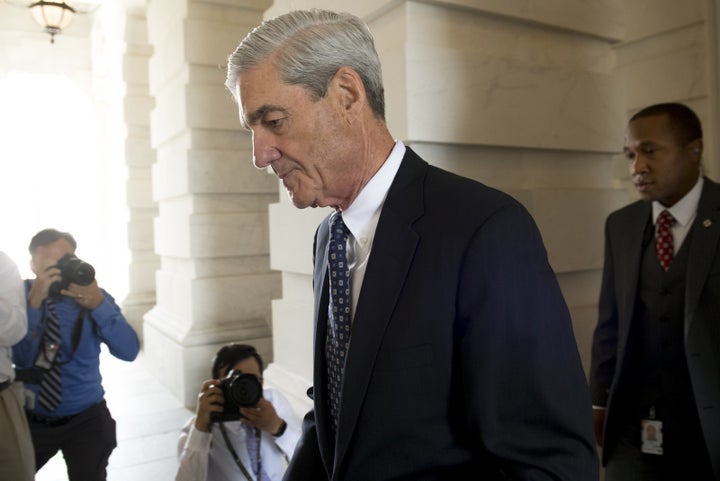
Special Counsel Robert Mueller's investigation "is ongoing," Rosenstein said. He did not provide any additional details. Rosenstein did not respond to shouted questions at the end of the press conference about whether the indicted defendants had a connection to the Russian government or Russian intelligence operations.

Read the indictment:

This is a developing story. Please check back at BuzzFeed News for the latest.


Source BuzzFeed - Politics http://ift.tt/2EADzyE

The Special Counsel Talked With The Former Spokesperson For Trump's Legal Team

Afp Contributor / AFP / Getty Images

The former spokesperson for President Trump's legal team spoke with Special Counsel Robert Mueller on Thursday, his lawyer confirmed to BuzzFeed News.

Mark Corallo served as the spokesperson for Trump's outside legal team for a short period this past summer but left in July. In January, the New York Times reported that Corallo was involved in senior-level discussions about how to respond to the news that Donald Trump Jr. had attended a meeting at Trump Tower during the campaign with a Russian lawyer who he had been told had "dirt" on Hillary Clinton.

The Times also reported that Mueller was looking to talk with Corallo and that he had agreed to do so. The Daily Beast first reported that the meeting happened on Thursday.

"I'm not going to talk about the substance," Corallo's lawyer, Victoria Toensing, said, though she did confirm that he spoke with Mueller for two hours on Thursday and that he is not expected to speak with the special counsel again.

Asked what that latter information means, Toensing said simply, "It means it's through," noting that any other insight on the special counsel's office plans would have to come from the special counsel's office.

According to the Times' report, Corallo planned to testify about a conference call that led him to have concerns that Trump's campaign staffer and current White House communications director Hope Hicks was allegedly "contemplating obstructing justice," according to sources who spoke with the Times — a claim that Hicks' lawyer said is "completely false."

This is a developing story. Please follow BuzzFeed News for the latest news.


Source BuzzFeed - Politics http://ift.tt/2Ewcrk8

The Trump Administration Is Arguing It Can Keep Information About The Trans Military Ban Secret

Mark Wilson / Getty Images

WASHINGTON — The Justice Department argued in court this week that officials don’t have to turn over certain information and documents about President Trump’s announced decision to bar transgender people from serving in the military — citing executive privilege.

The judge hearing one of the lawsuits challenging the policy pushed back against the Justice Department lawyer's claim. The judge said Trump administration officials were incorrectly arguing that an “absolute” privilege — meaning one that the judge could not rule against — protected the administration from having to turn over certain information regarding meetings or conversations the president had in advance of his July 26, 2017 tweets announcing an end to transgender military service.

“After consultation with my Generals and military experts,” Trump wrote in a series of three tweets, “please be advised that the United States Government will not accept or allow Transgender individuals to serve in any capacity in the U.S. Military. Our military must be focused on decisive and overwhelming victory and cannot be burdened with the tremendous medical costs and disruption that transgender in the military would entail. Thank you.”

Nearly a month later, Trump issued a further policy that directed the end of transgender service this year.

In a docket entry detailing the outcome of a telephone conference, US District Judge Colleen Kollar-Kotelly stated that she hopes to move the issues forward in a follow-up telephone conference on Friday. The judge laid out that both sides should be ready to discuss issues relating to two types of executive privilege raised by the Justice Department in the case: information the federal government “contend[s] is covered by the presidential communications privilege” and a dispute “regarding the deliberative process privilege.”

Executive privilege, while a term familiar to most Americans, is much more complicated — and dependent on the facts of specific cases — than often portrayed. It’s a rarely invoked set of different, but related, privileges that are available to protect executive communications from disclosure to courts, Congress, and often — ultimately — the public.

Often, the privileges, even if they cover the communication, are not enough to keep some documents from being turned over or testimony from being compelled if the information at issue is necessary for a congressional or legal matter to be able to proceed, it isn't available elsewhere, and the branch seeking the information is willing to fight for it. At the same time, judicial and congressional officials often negotiate out executive privilege-related disputes before they get to a final court ruling, due to concerns about separation of powers — meaning there isn't always clearly established law on specific executive privilege-related issues.

The presidential communications privilege and deliberative process privilege have related purposes: keeping executive branch decision-making private. As the US Court of Appeals for the DC Circuit put it in a 1997 case, “Both are executive privileges designed to protect executive branch decisionmaking, but one applies to decisionmaking of executive officials generally, the other specifically to decisionmaking of the President” and his senior advisers, as the court held in that opinion.

Of the two, the deliberative process privilege is more limited. It only protects “predecisional” material that is “deliberative” in nature like drafts of materials and policy recommendations to superiors. Because of these limits, factual material like raw data collected by an agency generally is not protected — and the privilege can be overcome with “a sufficient showing of need” for the material by the requesting party. Notably, the privilege generally does not protect against disclosure when misconduct is alleged.

The presidential communications privilege, on the other hand, is a more robust privilege that the Supreme Court addressed in the 1974 case over President Nixon’s White House audio tapes — and whether a court could order that they be turned over for a pending criminal trial of one of Nixon’s associates. The Nixon administration — citing the importance of protecting “the independence of the Executive Branch within its own sphere” — claimed an absolute privilege against disclosing the tapes as part of an ongoing criminal prosecution.
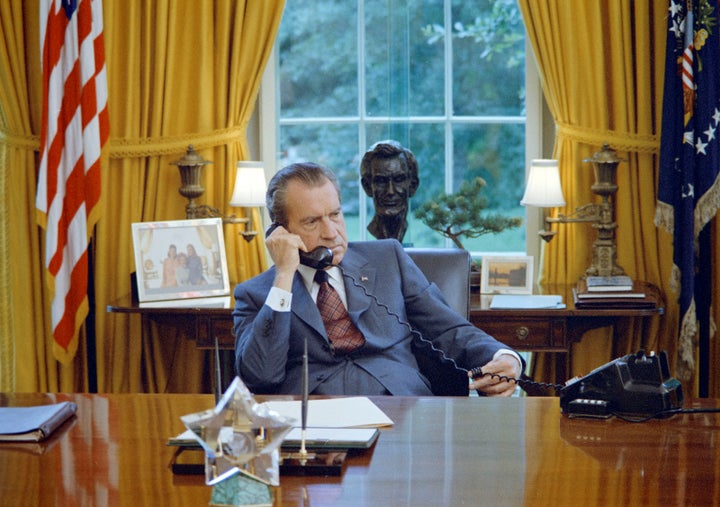
Former President Richard Nixon

Handout / Reuters

The Supreme Court held that “high respect” must be given “to the representations made on behalf of the President” — justifying a “presumptive privilege” for presidential communications, including factual communications. The court nonetheless ruled that a “generalized” assertion of the presidential communications privilege is not absolute and must be weighed against the need for the material by the other party seeking it — whether it be a court or Congress. In the Nixon case, the court held that the “demonstrated, specific need for evidence in a pending criminal trial” outweighed Nixon’s invocation of executive privilege.

In the case over the transgender military policy, the Justice Department lawyer, Ryan Parker, raised the presidential communications privilege in response to a request from the challengers, who have asked for information from the president about the identities of the consulted general and military experts referenced in the tweets, and what relevant meetings and conversations took place about the issue.

“[Y]ou've taken the position, it seems to me, or almost the position that it's an absolute privilege, and that's not correct,” Kollar-Kotelly said, criticizing the Justice Department’s position. At another point, she explained further: “[I]f you assert [the presidential communications privilege], it's presumptively so, but that is not the end of the inquiry. And the problem that I'm having is, you're not willing to have the rest of the inquiry with me.”

As a way of addressing the government’s concerns, Kollar-Kotelly discussed the possibility of the department turning over a log detailing the relevant meetings and conversations — not the content of the communications, just the fact of their existence — for her to review in an effort to determine if the privilege applies, but the DOJ lawyer kept insisting that the department’s position was that such a document would be covered by the privilege.

The DOJ lawyer didn’t budge.

After significant back and forth, the judge said, “I'm not talking about giving it to the plaintiffs. You keep going back to the plaintiffs. I am talking about giving it to the Court so the Court can make a decision as to whether or not this actually falls into the presidential communications privilege.” Finally, Kollar-Kotelly said, “[A]nswer it yes or no and give me an explanation. Are you willing to provide any information whatsoever about what might have transpired?”

“Your Honor, to answer in one word, the answer is no,” Parker responded.

Concluding the discussion a few minutes later, Kollar-Kotelly said, “I will figure out how I want to proceed with this, but this is not a good way to go about this.”

The deliberative process privilege discussion, surrounding withheld documents and redactions to documents that have been turned over, was more brief and less contentious, focusing in large part on a dispute over what constitutes a “decision” — given that the privilege only protects predecisional matters.

The dispute, as Kollar-Kotelly put it, appeared to be over “whether the tweet was the decision or the memorandum was the decision.” She suggested that decision-making is fluid at times and that “instead of going off on whether the tweet is the final decision or his memorandum is the final decision,” the lawyers should focus on whether the material at issue looks like the matter discussed is the type of material that usually would be seen as predecisional.

The challengers’ lawyer, Paul Wolfson from WilmerHale, said the government needed to specify what decision is at issue so it can be determined if the redacted material truly is predecisional or if it is “really just people reacting to a decision that was already made, which would make it postdecisional.”

Parker’s response was a bit winding, but it, in effect, said that the tweets set off a cascading series of decisions — “the tweet was a decision and that that decision itself gave rise to a series of additional decisions” — and that the redacted materials are all “deliberative material” protected from disclosure because the redactions represent predecisional material as to at least one of those decisions.

Kollar-Kotelly asked the parties to confer on those issues in an attempt to narrow down the number of documents at issue before she has to determine how to address the privilege claims.

“I will figure out how I want to proceed with this, but this is not a good way to go about this.”

This week’s court dispute is not the first time the Trump administration has raised the argument that documents sought in litigation should be protected from disclosure by executive privilege. This past December, in the course of defending the administration’s decision to end the Deferred Action for Childhood Arrivals (DACA) program, a discovery dispute arose in one of the challenges to the decision. A federal judge ordered the Trump administration to turn over documents in a challenge claiming the decision violated the Administrative Procedure Act. The Justice Department went to the Supreme Court to halt that order from being enforced, making several arguments regarding why the order was inappropriate, but, one of its final arguments was that at least some of the documents were covered by executive privilege and should not have to be produced.

The Supreme Court granted the Justice Department’s request on the grounds that the discovery order was premature, but the court added a warning regarding privilege issues. Near the conclusion of its order, the court noted, “In any event, the District Court may not compel the Government to disclose any document that the Government believes is privileged without first providing the Government with the opportunity to argue the issue.”

Of course, executive privilege issues also are expected to come up — and already are coming up — in the course of the special counsel and congressional investigations into Russian influence into the 2016 presidential election. While these other disputes are important in their own right, the government’s arguments in other cases she light on what might be expected should Special Counsel Robert Mueller seek information the administration doesn’t want to turn over or, as could happen with Steve Bannon, if a chamber of Congress votes to hold someone in contempt in response to a refusal to answer questions or provide documents.


Source BuzzFeed - Politics http://ift.tt/2BvbExj
Thursday, February 15, 2018

A Federal Appeals Court Ruled That Trump's Third Travel Ban Is Likely Unconstitutional

Leah Millis / Reuters

A federal appeals court on Thursday ruled that President Donald Trump's third attempt at a travel ban is likely unconstitutional, writing that, it "continues to exhibit a primarily religious anti-Muslim objective."

The US Court of Appeals for the 4th Circuit upheld a lower court injunction that blocked the Trump administration from enforcing the travel ban, but put its order on hold while the US Supreme Court takes up the issue of the ban.

The president's third travel ban is already before the Supreme Court, after the 9th Circuit ruled in December that it violated federal law. The 9th Circuit did not rule on the issue addressed by the 4th Circuit — whether the ban amounts to religious discrimination in violation of the US Constitution's Establishment Clause — but the justices asked for briefing on the constitutional question as well.

The 4th Circuit sided in favor of the groups challenging the ban in a 9-4 decision. Chief Judge Roger Gregory wrote in the majority opinion that the government's "proffered rationale for the Proclamation lies at odds with the statements of the President himself."

"Plaintiffs here do not just plausibly allege with particularity that the Proclamation’s purpose is driven by anti-Muslim bias, they offer undisputed evidence of such bias: the words of the President," Gregory wrote.

Gregory cited Trump's "disparaging comments and tweets regarding Muslims," the president's repeated references to a Muslim ban, the fact that Trump's previous travel bans were focused on majority-Muslim countries, and statements by Trump and his advisors that the latest order has the same goals as the previous ones.

This is a developing story. Check back for updates.


Source BuzzFeed - Politics http://ift.tt/2swWBQW

Wednesday, February 14, 2018

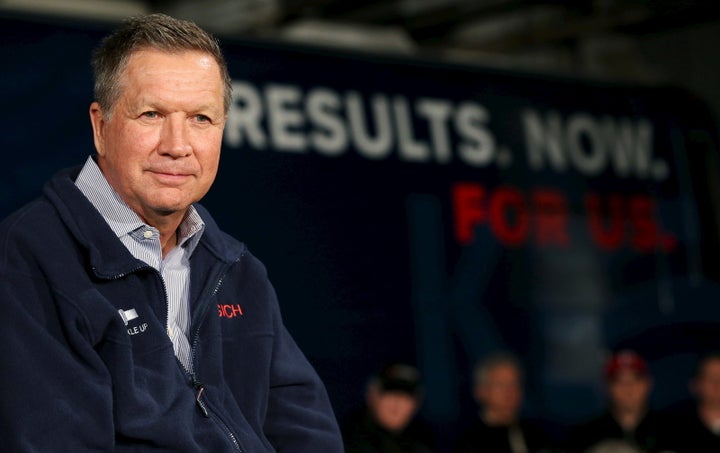
John Kasich’s Recent Moves Reflect His 2020 Options: Primarying Trump Or Fleeing The GOP

Ohio Gov. John Kasich

Aaron Josefczyk / Reuters

John Kasich’s brand is built around the idea of “two paths” for the Republican Party: one for center-right pragmatists like him, the other for flamethrowers like Donald Trump.

But as the Ohio governor considers a rematch with Trump in 2020, he is weighing two more-tactical paths. Does he challenge Trump, the sitting president, in primaries where Kasich won’t find much institutional GOP support? Or does he leave the party, go down a route littered with ballot-access hurdles and fundraising challenges, and run as an independent?

Sources close to Kasich’s political team have told BuzzFeed News in recent weeks that both options are in play. Deliberate or not, Kasich’s moves as the 2018 midterms approach reflect that. In Massachusetts, his still-active Kasich for America committee and Doug Preisse, one of his longtime advisers, have donated to Rick Green, who is seeking an open House seat as a Republican. In California, Kasich has encouraged Steve Poizner, who this week launched a campaign for state insurance commissioner as an independent.

Kasich and his team are identifying other midterm races where he can be helpful, return the favor to those who backed his 2016 White House bid, and collect chits for 2020.

“We’ve talked about it, but there have been no decisions made,” Bob Klaffky, a member of Kasich’s inner circle, said in an interview this week. “If there are people out there he believes in, and they ask for help, and he wants to do it, then he’ll do it.”

Others close to Kasich caution against seeing too many 2020 tea leaves in such activity. They note that Green and Poizner supported Kasich in the past, and that any investment in their races should not necessarily be viewed as building blocks for another presidential run.

Kasich has been frustrated with the Republican Party since losing its nomination to Trump two years ago. This month — when the New Hampshire GOP chair responded to word of an upcoming Kasich visit to the nation’s first primary state by pledging to support the president — Kasich’s chief strategist, John Weaver, acknowledged thoughts about an independent run. “Why,” he wondered, “does everyone assume the only option is running in a GOP primary?”

“I think we are all watching things closely,” Klaffky said this week. “This is just my opinion, but I think the time could be right for an independent bid. I think there’s a growing middle.”

Kasich discussed Poizner’s plans to wage a nonpartisan bid for insurance commissioner — a post he was elected to as a Republican a decade ago — before his announcement Monday, a Poizner adviser told BuzzFeed News. It’s not yet certain how much Kasich will do for Poizner, who was a national co-chair of his 2016 campaign. Also of note: Weaver wrote a December guest column for the Kansas City Star promoting Greg Orman as an independent candidate for Kansas governor. (Neither Weaver nor Kasich is involved with Orman’s team.)

A viable independent presidential bid would be tricky. Kasich would need the resources to win ballot access in all 50 states and to advertise a message that breaks through the traditional two-party system. But fundraising beyond Ohio always has been a challenge for Kasich, and he does not have the personal wealth that businessmen such as Poizner and Orman bring to their campaigns. Poizner, a former Silicon Valley executive, was a top donor to Kasich in 2016. But Kasich would need many more like him to bankroll an independent 2020 effort.

“The legal hurdles you can get over,” Klaffky said. “It’s the money” that’s a big challenge.

Kasich’s interest in New Hampshire and neighboring Massachusetts, where the Boston media market reaches much of New Hampshire, suggests groundwork for a Republican primary — an option that may be more likely if Trump for whatever reason doesn’t seek a second term. He will visit New England College on April 3, and this week he was booked as the May graduation speaker at Harvard’s Kennedy School of Government.

His team also keeps in touch with past New Hampshire aides, including Dante Vitagliano, his former operations director in the state.

But Kasich’s tenuous standing in the GOP — Trump is popular among the party rank-and-file, and many remain upset that Kasich never supported him — means his help is not always wanted. Several Republicans working for 2018 candidates who backed Kasich in 2016 acknowledged that a Kasich assist could do more harm than good. Even in Ohio, where Kasich is term-limited but enjoys high approval ratings, Lt. Gov. Mary Taylor has downplayed his endorsement of her as she attempts to score an upset in a gubernatorial primary.

Kasich could be more of an asset in Massachusetts, where Green is running to succeed retiring Democratic Rep. Niki Tsongas. Moderate Republican Gov. Charlie Baker carried the district in 2014, giving GOP leaders hope that they can pick up the seat with the right candidate. Green chaired Kasich’s presidential campaign in the state, and Vitagliano is managing Green’s bid. Kasich’s committee has donated $5,000 to Green. Preisse chipped in $1,000.

“I don’t have any poll numbers on that,” Vitagliano replied when asked if a Kasich campaign visit would be welcome. “But we certainly appreciate the governor’s help for Rick’s campaign.”


Source BuzzFeed - Politics http://ift.tt/2nZpekL

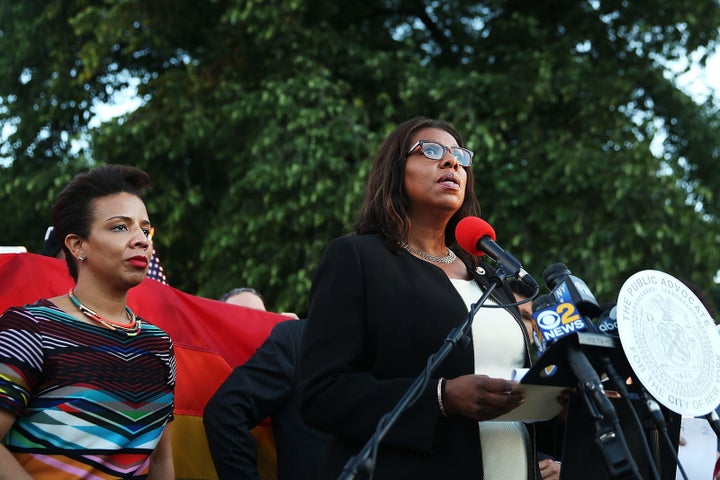
Sources: A Black Woman Democrat Is Saying She’ll Run For New York Mayor

Leticia James speaks at a memorial gathering for those killed in Orlando in 2016 in the Brooklyn borough of New York City.

Spencer Platt / Getty Images

Leticia "Tish" James, the public advocate for the city of New York, has told people in recent days that she intends to run for New York City mayor in 2021, according to two sources familiar with the communication.

Asked in a text message by BuzzFeed News if the rumors were true — that she made her intentions known to a small cadre of supporters — James texted back, “No comment.”

A spokesperson for James, however, did not deny that she has reached out to supporters.

“Tish is focused on continuing her work to be an effective public advocate, standing up for working families and the most vulnerable New Yorkers,” the spokesperson told BuzzFeed News in an email.

Her potentially running wouldn't be a shocking development in New York City politics. Bill de Blasio, who was re-elected mayor last year, was formerly the city’s public advocate. The office is widely viewed as a launching pad for politicians with designs on Gracie Mansion, and the public advocate is first in line to succeed the mayor. If elected, James would be the first black woman mayor of New York City.

Her early missives do appear to be a signal that James is eager to get the wheels turning on a contentious mayoral primary, even if it's years away. Formidable candidates could include Bronx Borough President Ruben Diaz Jr., current New York City Comptroller Scott Stringer, and possibly even Rep. Hakeem Jeffries., a Brooklyn Democrat currently serving in Congress.

In a brief conversation with BuzzFeed News in Washington last September, James said she looked forward the next step in her career, suggesting that while she understood questions surrounding her possible candidacy for mayor, she was not yet prepared to talk openly about it.

It’s not stopping people in New York from needling her, however. Last month, James spoke at Rev. Al Sharpton’s annual MLK Day celebration, a must-stop for the New York’s political elite. According to a source who was present, longtime observers and friends of hers took turns, half-jokingly, referring to her as "Madame Mayor."


Source BuzzFeed - Politics http://ift.tt/2EDmjrP

White House Reporters Are More Pissed Off Than Usual About The Rob Porter Mess

Pool / Getty Images

The White House press corps has become used to briefing-room spin, cleanups after Trump tweets, and flat-out falsehoods about presidential fixations like crowd size.

But for reporters covering the Trump administration, something feels different about the Rob Porter scandal. White House reporters say that the incident has transformed into the most infuriating and baffling episode in an administration whose communication strategy has often been defined by chaos and warring factions.

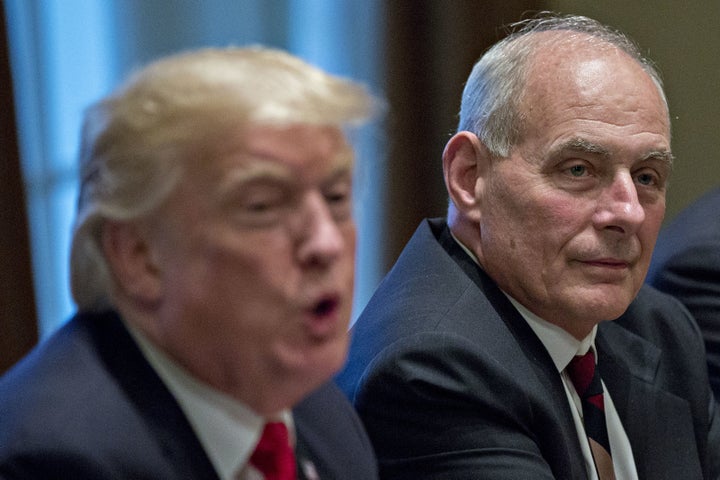
Day after day, since the Daily Mail first reported that the now-former White House staff secretary’s two ex-wives said he was physically and emotionally abusive, the White House has repeatedly contradicted the timeline of events that led to Porter’s departure. After originally praising Porter in a statement, for instance, White House Chief of Staff John Kelly told staff to say he had been tossed 40 minutes after he learned about the allegations, according to the Washington Post. That version of events was then challenged by press secretary Sarah Sanders at a White House briefing this week.

“There’s the extraordinary situation where the White House chief of staff and the White House press secretary are telling completely different stories about what happened,” said one White House reporter. “That’s wild even by Trump White House standards.”

The scandal has inherently damning components: Domestic violence (including photos) coupled with the fact that Kelly knew “several weeks ago” that Porter, who handled confidential material given to the president, would eventually be denied permanent security clearance, according to Politico. FBI Director Chris Wray complicated matters further when he testified before the Senate Intelligence Committee on Tuesday morning, once again contradicting White House statements. (Porter has denied the allegations and resigned.)

But the event, and particularly the clumsy handling, has redefined Kelly’s image both within the West Wing and the White House media, where he has been frequently portrayed as a steady hand. The groundswell of anti-Kelly leaks coming out of the White House in recent days has demonstrated how some frustrated underlings see this as a good chance to weaken a controlling chief of staff, White House reporters say. There has also been a growing anger recently among some reporters that Kelly has not been an honest broker in dealing with the press.

“This story offers a convenient vehicle to run Kelly over with his own lies and not have it look like it’s driven by reporters’ or a newsroom’s personal frustrations,” one reporter said.

Reporters, who preferred to speak anonymously about the people they have to cover, also say they feel as though they are being gaslit, almost comically, by people who should know better. For all the public talk of “fake news,” White House officials deal with the press daily and, in many cases, have normal working relationships with reporters covering the beat. The media’s reaction to the misleading Porter timeline, some reporters say, has therefore been stronger than something like an errant Trump tweet. “Normals lying is treated normally, as opposed to Trump lying,” said another reporter.

The White House did not return a request for comment.

There’s another inconvenient fact for the White House: No other big story has emerged as a news cycle competitor in the past week, which has allowed the media to continue to focus on the changing Porter account. “It’s amazing Trump hasn’t done something ridiculous to change the subject,” said a White House reporter.

Sanders has a few tried-and-true tactics to divert attention in the briefing room from what the press wants to ask about. On Tuesday, she brought Transportation Secretary Elaine Chao to the briefing for a Q&A. And in the past, when reporters are bearing down, Sanders often has a handful of conservative reporters she can call on to reliably change the subject. But White House reporters say that hasn’t been the case this time — the briefing room has become united in searching for answers on Porter.

“I think we are so animated about it because the level of fuck-up all around, from Trump and Kelly on down, is just so monumental and baffling, even by their exalted standards,” said another White House reporter.


Source BuzzFeed - Politics http://ift.tt/2BtPdbS

Mihir Garimella is making drones that go where humans can't

Drones can enter dangerous environments where humans cannot. But what if a drone could stop disasters from happening in the first place?


Source CNN.com - RSS Channel - App Tech Section http://ift.tt/2FTKNKj

It seems like every week we're finding new uses for drones. Here's some of the most interesting out there today.


Source CNN.com - RSS Channel - App Tech Section http://ift.tt/2sv3It8


Source CNN.com - RSS Channel - App Tech Section http://ift.tt/2EGVuTq

How a company founded by ex-spies uses AI to fight hackers

Cybersecurity firm Darktrace uses artificial intelligence to stop cyber attacks before they even start.


Source CNN.com - RSS Channel - App Tech Section http://ift.tt/2EFsqsY