Thursday, February 8, 2018

Mihir Garimella is making drones that go where humans can't

Drones can enter dangerous environments where humans cannot. But what if a drone could stop disasters from happening in the first place?


Source CNN.com - RSS Channel - App Tech Section http://ift.tt/2EOzGTH

It seems like every week we're finding new uses for drones. Here's some of the most interesting out there today.


Source CNN.com - RSS Channel - App Tech Section http://ift.tt/2Es2XWo

The Trump Administration Plans To Announce And Defend A New Transgender Military Policy

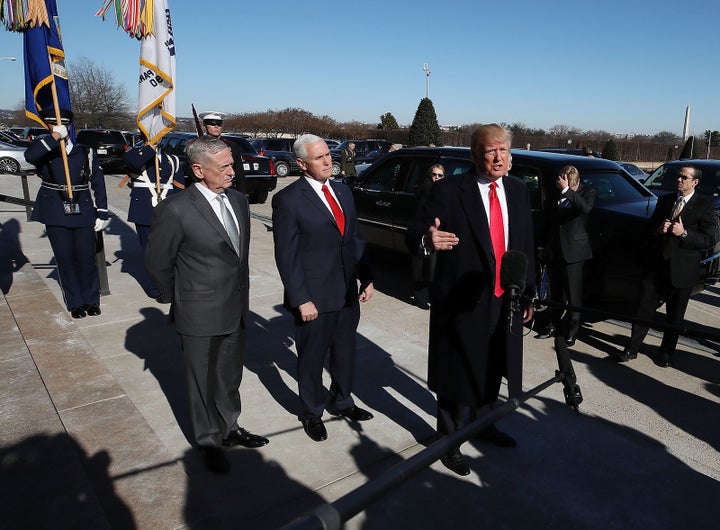
Mark Wilson / Getty Images

Justice Department lawyers have told a federal judge that they will be defending a new policy regarding transgender military service that will be "disclosed" by the Trump administration on Feb. 21, the federal judge wrote in an order this week.

There are currently several cases challenging Trump's policy that called for an end to open transgender military service. US District Judge Marvin Garbis, who is overseeing one of those cases, noted the new policy development in the course of a brief ruling on when the government must turn over certain information to those challenging the policy.

The Feb. 21 date referenced is likely referring to a date set by President Trump's August memorandum that set the policy. Under the memorandum, the defense secretary is supposed to submit an implementation plan for the three portions of the memo — recruitment rules, retention, and health care — to Trump by Feb. 21.

All three of those provisions have been put on hold by various federal courts — including by Garbis — and the administration stopped fighting a Jan. 1 deadline for accepting new military recruits who are transgender days before the deadline went into effect.

This week, Justice Department lawyers argued in one of those challenges that the defendants could not comply with obligations to turn over the required information "because they will not be defending the policy now at issue but will be defending the policy to be disclosed on February 21, 2018," Garbis wrote in a Tuesday order, summarizing what the Justice Department's lawyers had said in a telephone conference from earlier in the day.

The Justice Department declined to comment on the order, but a lawyer for the challengers who was on the call confirmed the accuracy of the judge's account.

Asked about the statement that a new "policy" would be "disclosed on February 21, 2018," Maj. David Eastburn, a Pentagon spokesperson, said that the Pentagon only would be preparing "recommendations," but that a final decision on the "new policy" would come from the White House.

"The panel that was established by the Secretary of Defense is presenting their recommendations to him. At the end of this month, The Secretary will make his recommendations to the President, who will then make a decision and establish the new policy on transgender [service] in the military," Eastburn told BuzzFeed News.

Under Garbis's order, the Justice Department is to fulfill their evidentiary obligations in the case "shortly after February 21, 2018."

Neither the White House nor the Justice Department provided any additional clarification on the plans or timeline for making them public.


Source BuzzFeed - Politics http://ift.tt/2BJn0yw

Wednesday, February 7, 2018


Source CNN.com - RSS Channel - App Tech Section http://ift.tt/1tJ9Ao3

Democrats Are Starting To Worry About The Georgia Governor’s Primary

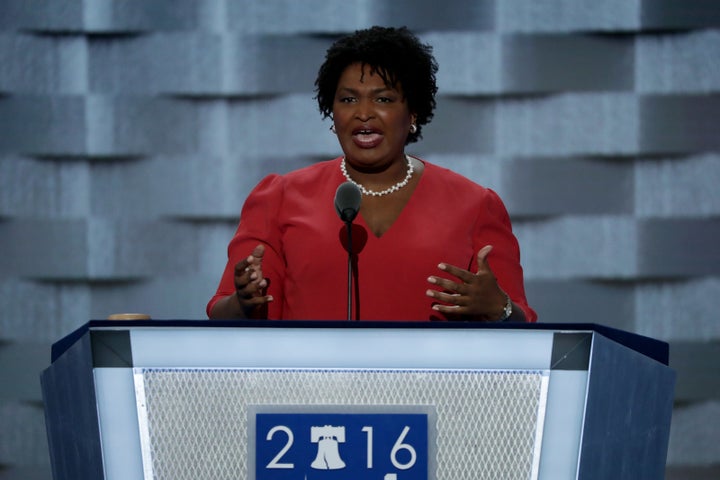
Stacey Abrams speaks at the 2016 DNC.

Alex Wong / Getty Images

Democrats have begun to worry that a contentious and expensive primary in Georgia’s governor’s race could majorly disadvantage the eventual nominee — in a race that some believe is winnable, amid President Trump’s unpopularity.

Three months remain until Georgia’s May 22 primary and Georgia Democrats have two choices in the race for governor: Stacey Evans, a lawyer and former state legislator who hails from the northern part of the state, and Stacey Abrams, a tax attorney and former House minority leader of the Georgia state legislature.

Abrams advisers told BuzzFeed News worry that if the primary runs its full course, the harder it will get for the campaign to go into a potential general election at full strength. That’s in part because of a big gamble by Abrams: running an expensive, aggressive field campaign almost from the very start; the campaign so far has spent nearly everything they’ve taken in, but national Democrats say they understand the necessity. “She’s doing a November field campaign in January because she’s a black woman,” a campaign adviser told BuzzFeed News.

That’s required a lot of fundraising, as well, including in places like Washington where Abrams is a well-known figure, after years of organizing voting rights and registration efforts. Abrams, for instance, recently drew a large audience at a fundraiser at The Park at 14th, a four-level nightclub frequented by a young political class. Servers held out plates of jerk wings and macaroni and cheese and music blared before a slate of speakers addressed the crowd, including a very young white woman. The idea of Abrams becoming the nation’s first black female governor has been the driving force and primary currency of her campaign. (The campaign is expected to announce about $1.7 million in donations during the last period, from about 14,800 donors — which would make the average donation a little over $100.)

Her argument is that any Democrat not working as hard as she is to expand the voter base is going to continue to lose elections, citing successful efforts in Alabama and Virginia as examples. “When you start a company or when you begin any type of project, your responsibility is to cultivate customers,” she said, invoking her business background.

“You do not reach customers by raising money and holding it and hoping your customers come to ask how much money you have, she told BuzzFeed News. “Any startup that went out for seed capital to put it in the bank and hold it just ‘cause, would not find new investors. They would not find traction because they would not find customers, which in this case are voters who have not been targets of campaigns.”

Meanwhile, there was a rumor circulating in recent weeks that Stacey Evans might drop out of the gubernatorial primary and run for attorney general or lieutenant governor instead. She’s not getting out, though.

“That,” in the words of an Evans adviser to BuzzFeed News, “is a lie.”

Her campaign has shown a willingness to take chances. In Atlanta’s tumultuous mayoral runoff election, Evans endorsed Keisha Lance Bottoms over Mary Norwood, a white independent candidate who had an overwhelming majority of the white vote and who was backed by a black city council president and former Mayor Shirley Franklin. The risk paid off. Bottoms declared victory when ahead by a slight margin on election night, and Norwood conceded the election two weeks later. (A Democratic source said Bottoms was heard speaking about Evans in glowing terms at the US Conference of Mayors’ 86th winter meeting last month.)

But it hasn’t been without controversy. Last month, the Evans campaign filmed a digital ad inside Ebenezer Baptist Church depicting Evans as a welcome guest. The campaign was swiftly rebuked by the church, which asked the campaign to remove the ad from its social media, but it had already gone viral. Through the pastor, the Rev. Raphael G. Warnock, the church released a statement, "Our church leadership and administration does not condone such use of the church's iconography or worship space.” The political commentator Jason Johnson called the apparent effort to superimpose her face on King’s at the end of the video, “political blackface.” Since then, she rolled out, formally, the endorsement of a well-known district attorney who is a black woman.

In the background of all of this, the top Republican challenger Lt. Gov. Casey Cagle raised a whopping $7 million according to his most recent filing.

That’s not all that’s giving the Democrats in the race anxiety. The deadline to file if you intend to run for governor in Georgia is March 9.

LINK: Stacey Abrams Wants To Be The First Black Woman Governor. But First She Has To Win The Nomination.


Source BuzzFeed - Politics http://ift.tt/2nP9bFv

Monday, February 5, 2018

Early Presidential Candidate John Delaney Is Already Running Two Ads In Iowa

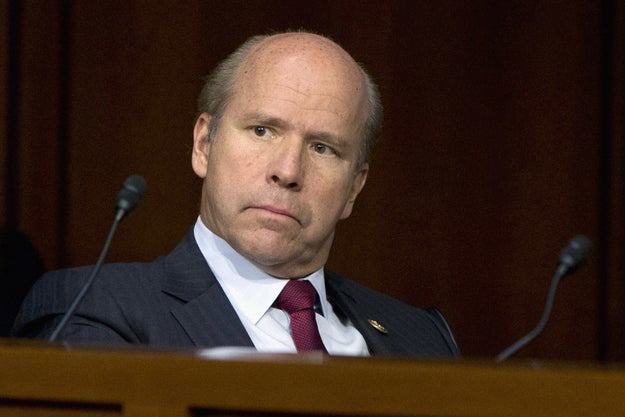
Joint Economic Committee member Sen. John Delaney, D-Md. listens as Federal Reserve Chair Janet Yellen testifies before the committee's hearing on Capitol Hill in Washington, Thursday, Dec. 3, 2015. (AP Photo/Jacquelyn Martin)

Jacquelyn Martin / AP

Maryland Rep. John Delaney, the first Democrat to announce a presidential bid against Donald Trump, is now running two TV ads in the early-voting state of Iowa.

Delaney, a three-term congressman and former banking executive, launched his presidential campaign last July in a Washington Post op-ed, more than a year and a half earlier than candidates typically jump in the race to become their party's nominee. This weekend, he also became the first candidate to buy airtime.

The 54-year-old candidate is running two ads running for four weeks across Iowa — part of a $1 million campaign, according to Delaney spokesman Will McDonald.

The first ad began Sunday, timed to the Super Bowl, as reported in the Des Moines Register. The second, titled "Early," will begin airing Monday on network and cable in Des Moines and Cedar Rapids, McDonald said. “How do we bring our country together?” Delaney asks in the ad. “How do we begin to heal a fractured nation?”

“The work starts now.”

youtube.com

The ads were made by the firm Siegel Strategies, according to McDonald.

Both spots pitch Delaney to Iowa voters as a pragmatic, no-gimmicks lawmaker willing to work across the aisle. It’s a message seen more often in a general election than a Democratic primary — a signal that the little-known Delaney will not try to compete with left-leaning candidates for the progressive mantle. He has shied at times from labels like "moderate" and "centrist," but described himself as a pro-business candidate who understands both the need for regulation and the value of the free market.

Delaney made his sixth trip to Iowa over Super Bowl weekend. He has said he plans to hold up to 500 events there before January 2019. His presidential campaign is among the earliest in the history of the Iowa caucuses. He plans to finish serving his third term in Congress before stepping aside after the 2018 election to focus on his presidential campaign — one he is willing and able to fund himself. (Delaney's estimated net worth stands at more than $91 million.)

"No games, no cat-and-mouse, no backup plan at the 11th hour if a focus group goes badly," he wrote in his 2017 Washington Post op-ed. "My approach goes beyond party and partisanship; I am first and foremost an American."


Source BuzzFeed - Politics http://ift.tt/2E5UeFN

How a company founded by ex-spies uses AI to fight hackers

Cybersecurity firm Darktrace uses artificial intelligence to stop cyber attacks before they even start.


Source CNN.com - RSS Channel - App Tech Section http://ift.tt/2E3sIZw

Friday, February 2, 2018

The RNC Is Looking At A Rule That Could Block A Ted Cruz-Like Strategy In 2020

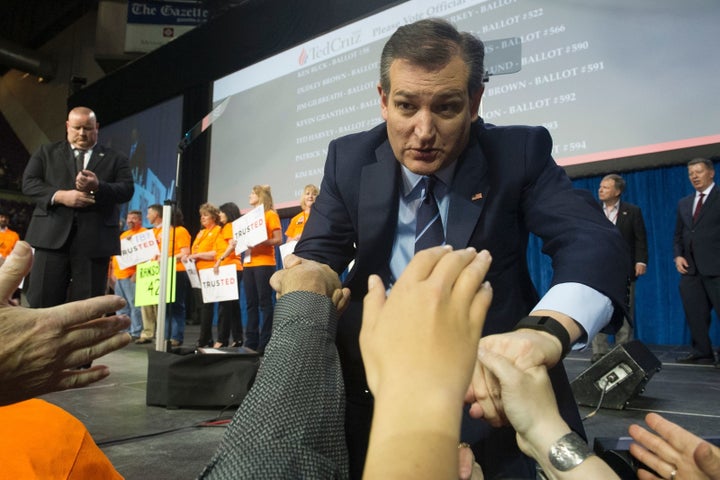
Cruz greeting supporters at the Republican Convention in Colorado Springs, Colorado in 2016.

Jason Connolly / AFP / Getty Images

Ted Cruz’s micro-level attention to delegate math in 2016 kept him alive longer in the race for the Republican presidential nomination and prompted eventual winner Donald Trump to stew over what he called a “crooked deal” and “rigged system.”

The kind of insider politicking that Cruz mastered at state caucuses and conventions now appears to be the target of a rule change the Republican National Committee is exploring.

Under a proposal discussed this week during the party’s winter meetings, states that hold primaries for rank-and-file voters — rather than those less accessible contests — could receive extra delegates to the national convention.

It’s not certain that the incentive will be placed before the full RNC later this year. RNC officials downplayed the idea as one of many tossed around Thursday during the Presidential Nominating Process Committee’s closed-door session.

The panel is consulting with the Trump White House on rule changes for 2020 and will issue recommendations in the coming months. Addressing members Friday, RNC Co-Chair Bob Paduchik, who is leading the panel, described the gathering as “very productive.”

Members who spoke to BuzzFeed News said the extra delegate proposal was pitched as a way to encourage primaries, which are far more inclusive, and not as a way to block a Cruz-like strategy from a Trump challenger in two years. The Iowa caucuses, which traditionally kick off presidential nominating season, are known for low turnout among registered voters.

Participating in a caucus can involve spending hours at a caucus site rather than minutes in a voting booth. Candidates who invest heavily in organizing and mobilizing caucus voters often reap the benefits: Cruz won Iowa in 2016, as well as caucuses in Kansas, Maine, and Utah.

State conventions are even more exclusive, reserved for hardcore party insiders. Cruz’s aggressive approach to this format two years ago prolonged a nomination fight with the frontrunning Trump and raised the prospects of a contested convention that never materialized. In Wyoming, for example, won all 14 of the state’s delegates up for grabs at a state convention. The Texas senator swept similar contests in Colorado.

Voters are "going absolutely crazy because they weren't given a vote,” Trump said on Fox & Friends after Cruz’s Colorado triumph. “It's a crooked deal. ... It’s a rigged system.”

A few days later, Trump tweeted: “Biggest story in politics is now happening in the great State of Colorado where over one million people have been precluded from voting!”

Nevada — which along with Iowa, New Hampshire, and South Carolina, has been one of the first four “carve-out” states on the primary calendar — held caucuses (won by Trump) in 2016. There has been speculation among RNC members at recent meetings that Nevada could lose its status. But Michael McDonald, the state’s GOP chairman and a member of the nominating process committee, told BuzzFeed News that no such change is on the table.

“I don’t ever take anything for granted,” McDonald said. “I feel good about it. But, respectfully, I want to remain there. I’m fighting for everything we can, along with the other carve-out states.”

McDonald, like his counterparts in those early states, said he hasn’t heard from any Republicans interested in challenging Trump. He also doesn’t believe incentivizing primaries over caucuses and state conventions would change the playing field in 2020.

“Either way it goes,” McDonald said, “caucus or primary, what this president is doing — it’s not going to matter.”

LINK: Republicans In Early Voting States Don’t See A Path For A Donald Trump Primary Challenger


Source BuzzFeed - Politics http://ift.tt/2FG7cdX

Thursday, February 1, 2018

Republicans In Early Voting States Don’t See A Path For A Donald Trump Primary Challenger

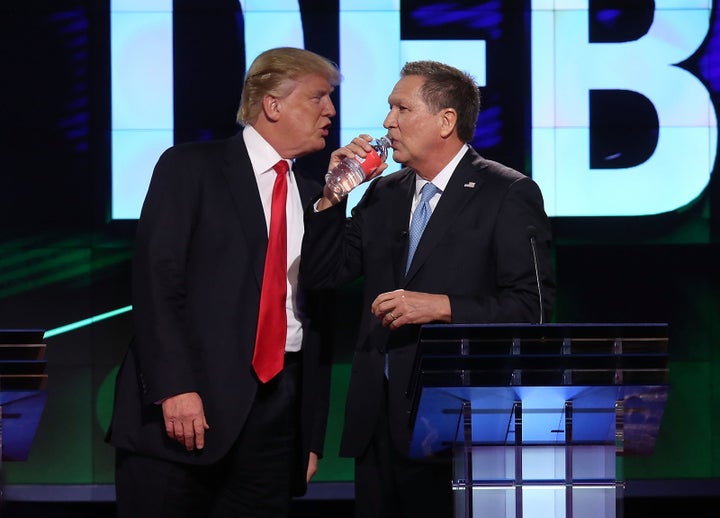
Then–presidential candidates Donald Trump and John Kasich at a Republican debate in 2016.

Joe Raedle / Getty Images

John Kasich — the Republican governor of Ohio, unsuccessful candidate for president, and perpetual Donald Trump scold — is planning another trip to New Hampshire. And that's renewed speculation that he (or another Trump critic, like Sens. Jeff Flake or Ben Sasse) might be eyeing a challenge to the sitting president, something that hasn’t seriously happened in decades, and comes with significant hurdles.

Striking a blow to President Trump’s reelection chances almost certainly would require an upset victory or better-than-imagined showing — think Eugene McCarthy chasing LBJ in 1968 — in New Hampshire or one of two other key early voting states: Iowa and South Carolina.

But would-be Trump challengers won’t find many friendly GOP leaders there. In interviews this week at the Republican National Committee’s winter meetings, top party officials from these states pledged allegiance to Trump and questioned why anyone would bother to try to wrestle the nomination from him.

“If and when that would happen, I have confidence that the South Carolina Republican Party would endorse President Trump,” said Drew McKissick, that state’s GOP chair.

New Hampshire GOP Chair Jeanie Forrester at first seemed puzzled when asked if any Republicans had reached out to her about a possible primary bid. “Against the president?” she replied.

“I’d have to really think about that,” she said later when asked if the party would endorse in a contested primary. “My general thought is that he is the president, and I would support him.”

The dynamics are a bit different in Iowa. There the state party officially is expected to remain neutral because it oversees the influential first-in-nation caucuses. But former Rep. Jeff Kaufmann, the state chair, has lit into Sasse. And Steve Scheffler, Iowa’s RNC national committee member, is on record saying that individual Republican leaders in the state should stand behind Trump.

“You never say never,” Scheffler said Thursday when asked about the viability of a primary challenger in Iowa, “but I just don’t see it happening.”

John Weaver, Kasich’s political strategist, told BuzzFeed News in an email that “many respected Republicans, independents, and some disaffected Democrats … including influential opinion leaders in those states with early primaries” have urged Kasich to run in 2020. He said Kasich is focused on finishing his second and last term as governor and has made no decision.

"No one,” Weaver added, “decides to run or not run for president based on the views of a few party insiders.”

The mechanics of a primary challenge are messy, even in the most tempting of circumstances and regardless of whether Kasich is the right candidate. (Others seen as potential Republican rivals include Flake, who will soon retire from the Senate, and Sasse, who has spoken at GOP events in Iowa in recent months.)

But Trump is unpopular, unpredictable, and untethered to the old-school GOP. He’s flirted with enough disaster in his first year to invite not only doubts about the power of his incumbency, but also speculation about impeachment, resignation, or a decision against standing for a second term. No one knows where the Trump presidency will be in two years, let alone two months. Still, with the exception of Kasich’s enduring interest in New Hampshire and Sasse’s speeches, there’s no evidence that anyone other than Trump is preparing for a primary.

Take next week's off-year caucuses in Iowa. The Trump reelection campaign printed 16-page pamphlets promoting the president and sent them to the Iowa GOP for distribution at caucus sites. An Iowa GOP official told BuzzFeed News that the state party would provide the same service if another presidential contender sent literature, but no one besides Trump has.

In South Carolina, GOP event organizers have struggled in the past year to book speakers — many high-profile Republicans don’t want to send the wrong signal, McKissick said. An appearance last year by Sen. Cory Gardner of Colorado merited this line from the Charleston Post and Courier: “South Carolina political party dinners usually attract future presidential hopefuls to gauge their interest in an early primary state.” (As McKissick put it to a reporter: “You could come down and speak and people would think you were running.”)

Also complicating the path for any Trump challenger: the RNC itself. It’s tightly aligned with the White House. And this week’s meetings in Washington include another gathering of the Presidential Nominating Process Committee, which is expected to make the 2020 primary a cakewalk for Trump. RNC Co-Chair Bob Paduchik, who developed an adversarial relationship with Kasich while serving as Trump’s Ohio campaign director in 2016, is steering the process.

McKissick said no one has sought his advice about a 2020 bid. But if someone did?

“First off, they’re on their own,” he said. “I’m going to tell them we support the president. … I speak at county party meetings, Republican women’s club meetings, and all around — once a week, at least — somewhere around the state. I ain’t running into any South Carolina Republicans who are looking to buy anything right now that ain’t Donald Trump.”

Kasich, with his book last year lamenting what’s become of the Republican Party and a national TV lap this week that included Late Night With Seth Meyers and Morning Joe, is the least shy about his interest. His April 3 speech at New England College will be his second visit to New Hampshire in less than a year. Kasich finished second to Trump in the state's 2016 primary, and it was the high point of his campaign. But when he was asked on Morning Joe if someone would challenge Trump for the nomination, he danced around the question. “If you can’t raise the money and make a good case, you don’t run, unless you just want to do it for the heck of it,” he replied.

The governor also has signaled he might be interested in running as an independent: “Why,” Weaver wondered in his email to BuzzFeed News, “does everyone assume the only option is running in a GOP primary?”

Forrester acknowledged that Kasich’s moves have drawn attention, but like McKissick, she said Kasich and other potential candidates have not asked her for advice.

“I like to think back to when I first decided to run for office,” Forrester said. “I had a lot of people telling me to stay out of it. I would never discourage anyone. I would lay out all the hurdles — can you raise enough money? — not as discouragement‚ just as the facts.”

“I couldn’t tell [Kasich] what to do,” she added. “And if I did, it’s not like he’d listen to me.”


Source BuzzFeed - Politics http://ift.tt/2rXZoSZ

Trump Incorrectly Claims His State Of The Union Had The Largest Viewership In History

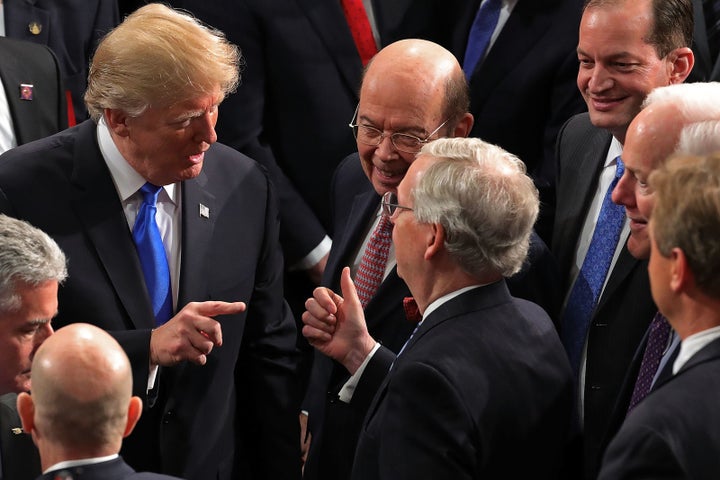
Chip Somodevilla / Getty Images

In a tweet Thursday, President Donald Trump incorrectly claimed that more people watched him deliver the State of the Union than at any point in history, with a viewership of 45.6 million.

While the figure cited is accurate, it is not the highest recorded viewership in history. In fact, the previous three presidents have had higher viewership for their deliveries of the speech, with President Barack Obama's viewership at 48 million in 2010, President George W. Bush at 62.1 million and 58.1 million in the early 2000s, and President Bill Clinton at 53.1 million and 45.8 million in the 1990s, according to the Nielsen company, which measures viewership.

The president references Fox News' viewership in his tweet, the same network later tweeted figures that contradicted his claim of record viewership.

Trump's State of the Union address stuck largely to his script. In it he touted his roll back of regulations, slammed gangs and terrorists, and talked about working with people across the political aisle.

A BuzzFeed News analysis found that the reading level of the State of the Union has trended downward over the years, putting Trump's address at about an eighth-grade reading level.


Source BuzzFeed - Politics http://ift.tt/2GC9lbO