Monday, April 16, 2018

Michael Cohen Is In Court Over Materials The FBI Seized In A Criminal Investigation

Michael Cohen

Mary Altaffer / AP

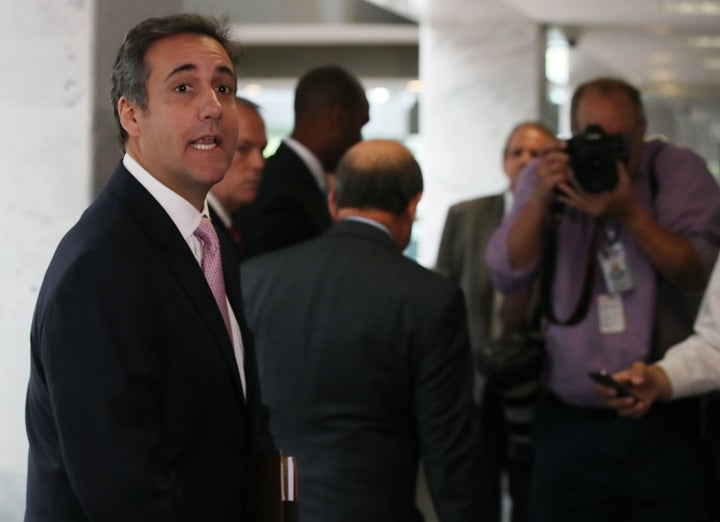
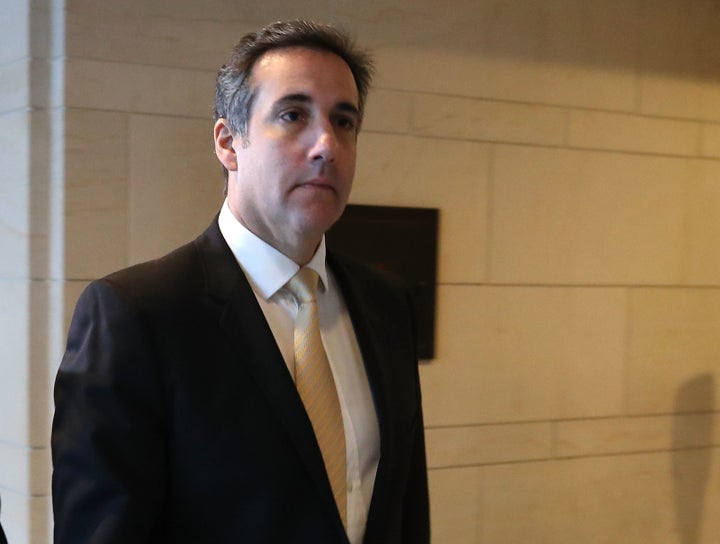
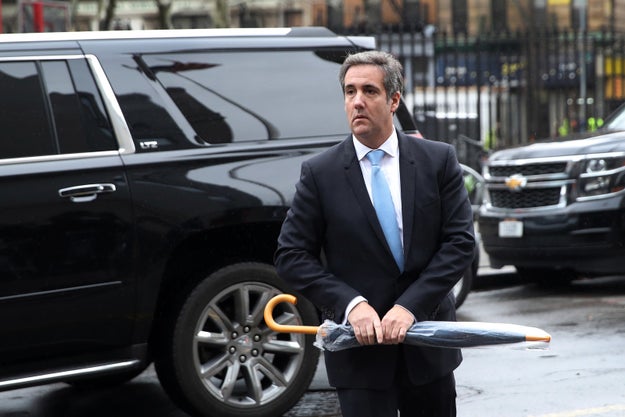
President Donald Trump's longtime personal lawyer, Michael Cohen, arrived at the federal court in Manhattan on Monday afternoon for a hearing relating to materials seized from his home, office, and hotel room.

This is the second day of hearings in the case. On Friday, US District Judge Kimba Wood demanded Cohen appear on Monday — creating a frenzy of reporters outside the courthouse in lower Manhattan. Michael Avenatti, the lawyer for Stormy Daniels, who is suing Cohen in a separate case, also came to court. "It's a Stormy day," he told reporters before going inside.

Daniels is also expected to be in attendance.

Cohen is asking Wood for an order allowing his lawyers or a special master appointed by the court to first review the materials before anyone from the US Attorney's Office in the Southern District of New York — which executed the warrant — does so.

The US Attorney's Office has proposed to use a so-called "taint team" to conduct the initial review — lawyers from the office who are not involved in the Cohen investigation — to determine what, if any material, should be shielded from the investigators because it is protected by attorney-client or another privilege.

Cohen's lawyers from McDermott Will and Emery, however, argue that appointing a special master would "avoid even a hint of impropriety here in the review of Mr. Cohen’s data and documents."

Trump has also brought in his own lawyers from Spears and Imes to protect his interests as one of Cohen's clients. They, in a filing on Sunday night, made clear that they believe Cohen and Trump's lawyers should receive copies of the seized materials to make their own assessment of which documents are privileged.

Although the issue of who gets the initial review of the seized materials is the primary focus of the hearing, Wood at the first set of hearings on Cohen's request this past Friday made it clear that she wanted to a list of Cohen's claimed clients. That request came as a result of Cohen's lawyer at the hearing, Todd Harrison, claiming that "thousands" of documents involved would be protected by attorney-client privilege. Wood pushed back against the claim, asking for information about his clients.

In a Monday morning filing, Cohen claimed only three legal clients since leaving his job at the Trump Organization in January 2017 and operating as a solo practitioner: Trump; GOP fundraiser Elliott Broidy; and a third, unnamed individual.


Source BuzzFeed - Politics https://ift.tt/2EQx5ah

The Florida Governor Primary Is A Big Experiment For How Democrats Run Against Trump

Don Juan Moore / Getty Images

Florida has three top Democratic contenders for governor. And each of them is employing a different strategy in how to approach President Donald Trump.

The race’s top candidates — former Rep. Gwen Graham, former Miami Beach Mayor Philip Levine, and Tallahassee Mayor Andrew Gillum — all are campaigning hard for the Democratic mantle in a state the president won in 2016. Graham’s early campaigning has been heavy on anti-Trump rhetoric, Levine’s has been very light, and Gillum’s balancing somewhere in between.

Since the primary isn’t until Aug. 28 — and polling shows voters aren’t especially familiar with any of the candidates — Florida may offer a great look at what Democratic voters really want from their candidates when it comes to a central question hanging over the party’s national politics: how best to run against the president.

“We don’t yet know what works as it relates to Trump,” said Ashley Walker, a top Democratic strategist who was Barack Obama’s Florida state director in 2012. “He is a brand unto himself and has been fairly successful at rising above political party and establishment, so it’s hard to say what will work against him.” In Florida, the Democratic candidates’ decisions on Trump speak more to their personalities than they do to party doctrine, she said. “I don’t think there’s a right way or a wrong way to do it.”

The race promises to be expensive and closely watched, as well, especially by those with a potential stake in running against Trump next time. Already, Julian Castro has endorsed Gillum — calling him the Democrat with “the courage of conviction, even when it’s not politically convenient” — and Kirsten Gillibrand has thrown her support behind Graham. In a statement, a DGA spokesperson, Jared Leopold, noted that the general election would be highly watched, and that “Voters across the country, especially in Florida, are looking for governors who will stand up to bad policies coming out of Washington.”

In practice, Gillum is campaigning for governor as a progressive populist. (He likes to say on the trail that he understands the lived-experience of ordinary, working-class Floridians, and contends he is the only non-millionaire in the race.) One of Hillary Clinton’s more effective messengers in 2016, Gillum said in an phone interview with BuzzFeed News that Democrats already ran against Trump and his message in 2016. He thinks turning out voters is the most important thing he can do to win, and while he won’t take hitting Trump “off the table completely,” he said liberals, and voters of color in particular, don’t need to be reminded that Trump’s policies are bad for Florida.

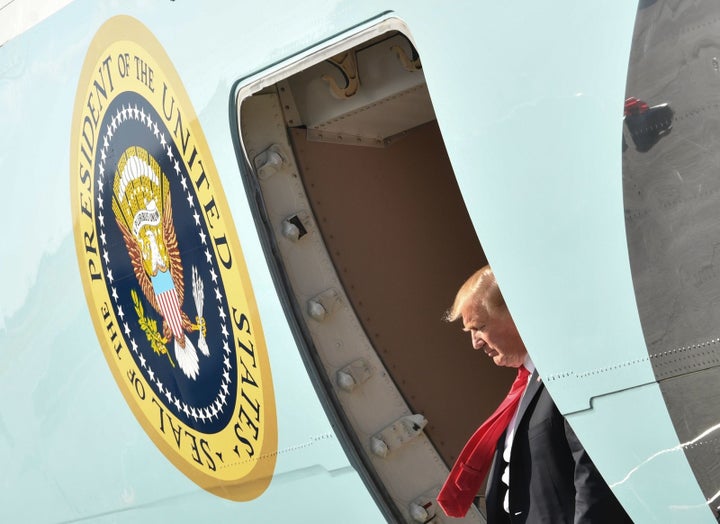
Trump arrives in West Palm.

Nicholas Kamm / AFP / Getty Images

“Frankly, running against Trump is going to be insufficient to win,” said Gillum. “We have to give voters a reason to turn out, and I trust my chances at being able to move the part of our electorate that is more difficult to turnout in midterm election over anybody in this race on either side.”

Gillum is critical of Graham’s approach on Trump, the most overt anti-Trump strategy in the race. Graham went up this month with a digital ad in which she made six direct mentions of Trump, including saying, “Donald Trump is not gonna to be able to stand in my way of doing what's right for the people of Florida,” she said at the end of the ad. Said Gillum: “[It’s like], who are you running against?”

Graham’s campaign even first placed the ad in the same media market as Mar-a-Lago. But it could be a smart strategy for Graham, a more known entity in Florida elected to Congress before who is the daughter of a Florida political legend. Strategists observing the race told BuzzFeed News that because she won’t need to work as hard to increase her name ID — and is the only female candidate in a field of men — coming off the top rope against Trump in her first ad wasn’t a bad idea.

“Of course I’m standing up to Trump,” said Graham in an email to BuzzFeed News. “Not only is Trump deliberately dividing our country at a time we need to be pulling together, but Trump’s policies on everything from health care to protecting our environment are also a direct threat to Florida and our families. Other candidates for governor may choose to avoid Trump, or go soft on Trump, or whatever — but I most certainly will not.”

Graham told BuzzFeed News that since Trump’s election that there has been a shift in Florida. She said the Trump administration has threatened immigrant communities, undermined environmental protections, and showed “cruelty” toward Puerto Rico after Hurricane Maria.

“Others may look at how to deal with Trump through a political lens, calculating the votes or the politics,” said Graham, who added that she views her approach as a duty of vying for the governor’s mansion. “I’m leveling with the people of Florida about the challenges we face with this president in the White House.”

Graham is also seeking to draw a sharp contrast with Philip Levine, a pro-business moderate who her campaign says is soft on Trump.

They’re not alone in that observation. “He almost never fires off press releases or tweets criticizing President Donald Trump or Gov. Rick Scott,” the political editor of the Tampa Bay Times recently wrote. Levine has argued that criticizing Trump is “not a vision,” but he has even avoided a direct questions about Trump. Once, he was asked by a local television station about Trump’s disparaging remarks about Haiti and African countries as “shithole countries” and what he made of the president, and responded, “Well, I can tell you this: I don't run around the state of Florida talking about President Trump.”

Levine at a post-Parkland rally

Don Juan Moore / Getty Images

To the question of whether he would appeal to Florida voters by running against Trump, Levine answered, “You know it’s interesting… I don't run against anybody. I run with my own message. I’m not right, and I’m not left — I’m forward. I’m running as a Democrat but before I’m a Democrat, I’m an American.”

Levine spokesperson Christian Ulvert told BuzzFeed News that Levine, in fact, spent a year campaigning against the president, rejecting the idea that Levine has somehow been soft on Trump – and even talked up a pithy line he said Levine’s delivered making an analogy likening Trump voters to students who were duped into enrolling in Trump University. Ulvert said he instead has campaigned with a message on the economy. Levine went up on TV with an ad on guns, calling Parkland “a wake up call we can’t ignore” and on immigration (“In Washington these days, they’re taking shots at immigrants who devoted their lives to this country”).

“We’re not running against Donald Trump, we’re running against the policies that are causing Floridians problems and leaving them out of opportunity,” said Ulvert, highlighting Levine’s economic vision and his intent to inject it into the political landscape. “Mayor Levine is prepared to take on the White House on these policy fights.”

If there’s any indicator about how Democrats nationwide who are running for governor may wrestle with Trump this year, it may lie with Washington Gov. Jay Inslee, who chairs the Democratic Governors Association. Inslee firmly believes that Republican gubernatorial candidates will have to own Trump this cycle, and has in interviews expressed dismay that more of them haven’t stood up to Trump.

Inslee himself confronted Trump inside the White House while in Washington D.C. for a meeting of the National Governors Association, telling the president that on the subject of arming educators, “We need to do a little less tweeting and a little more listening.” It was a startling scene, but perhaps one that Inslee — whose actions that day intensified rumors that he is mulling a presidential run in 2020 — believes is an approach that resonates with voters.

LINK: Ohio Democrats Are Worried That The Wrong Governor's Nominee Could Throw Away Their Shot At Turning Ohio Blue

LINK: A Texas Democratic Primary Has Turned Ugly — And It Could Be A Preview Of What Competitive Races Look Like


Source BuzzFeed - Politics https://ift.tt/2qAdxS5

Sunday, April 15, 2018

Democrats Are Worried About Ohio's Closer-Than-Expected Primary For Governor

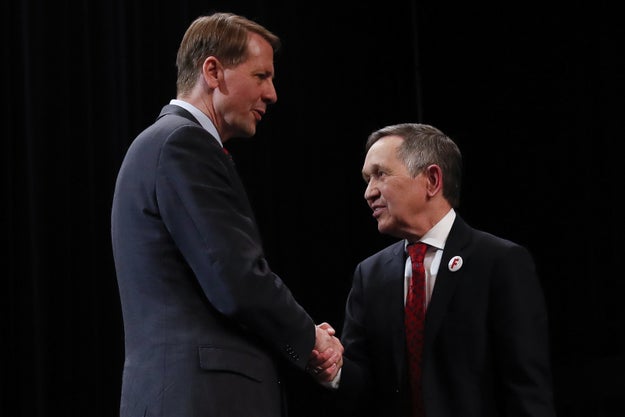
Richard Cordray and Dennis Kucinich shake hands at this week's primary debate.

John Minchillo / AP

Under the dim venue lights of the Newport Music Theater just across the street from Ohio State University, college students stood in the pit talking about purchasing caps and gowns for graduation, Democratic socialists on campus, and their admiration of progressive star Senator Elizabeth Warren just before she took the stage to stump for Richard Cordray — who’s running in the tighter-than-expected Democratic primary for governor.

"Let's face it, Rich is not flashy. He's a nerd. Just like me," Warren said to a crowd peppered with nearly the same amount of “nevertheless she persisted” gear as Cordray-Sutton signs. "He's quiet, he's unassuming, he's humble, but deep down there is a fighter and not just any kind of fighter. Rich is the kind of fighter I love. He is a fearless fighter. My kind of man.”

Cordray’s speech wasn't, in fact, flashy — nor was the response from the college students for much of the speech — but later Friday night when the former head of the Consumer Financial Protection Bureau stood before the Ohio Democratic Party’s Legacy Dinner, the crowd of party officials and insiders greeted him with a raucous welcome.

It’s the hope for some of them that Cordray will prevail in the early May primary and — leveraging liberal enthusiasm, the chaos of the Trump administration, and the recent resignation of the Republican state speaker of the house — then go onto win in November, giving Democrats the upper hand in Ohio’s redistricting.

But another candidate — Dennis Kucinich — has potentially disrupted the plans of many national and state Democrats. The primary has put the two progressive heavy hitters at odds over who’s best fit to be at the top of the ticket, splitting key endorsements, attracting national attention, and offering maybe the highest profile midterm example of Democrats wrestling with just how progressive their candidates should be.

“I think a lot of people were surprised by the polling and it goes to show that you can’t count Dennis out in this election,” said Herb Asher, a professor emeritus of political science at Ohio State University.

“I’m sick of the Democratic Party picking the wrong candidate and eventually losing because of it."

How close it is depends on the poll you look at, but numbers generally shows a close race between Cordray and Kucinich, the well-known populist and two-time presidential candidate, who has long supported legalizing marijuana and Medicare-for-all, and has been endorsed by the Bernie Sanders-aligned group Our Revolution (despite Sanders himself deciding to stay out of the race). Last week, one poll of likely voters gave Cordray 27% of the vote and Kucinich 13%. In an earlier SurveyUSA effort, each pulled 21% of support from likely Democratic voters with 46% still undecided.

After Republican waves in 2010 and 2014, Democrats badly want to win back governors’ seats, especially in notoriously gerrymandered places like Ohio where Trump won big. Though they are not endorsing in the race, for instance, former attorney general Eric Holder’s redistricting project is keeping a close eye on the race, too, targeting an array of races: governor, secretary of state, attorney general, and state legislature seats.

“I really think Democrats have a good shot to win in the general election if we can put the right candidate on the ballot,” said one Democratic operative working in Ohio in a phone call with BuzzFeed News. “I’m sick of the Democratic Party picking the wrong candidate and eventually losing because of it and if the party goes with Kucinich then that’s absolutely what we’re going to be doing.”

Kucinich has been a prolific name in Ohio politics for nearly 50 years, where he rose from the ranks of the Cleveland city council to his notorious stint as the wunderkind mayor of the city, when a standoff over selling an electric utility (Kucinich refused, a move later praised) resulted in the first municipal default in the US since the Great Depression (a move that earned Kucinich the awe or ire of many locals who lived through it).

“I’m the same age as Kucinich and I’m from Cleveland, and older Ohioans like me remember Dennis’s fiasco when he was mayor and lots of us just don’t want someone with that kind of temperament in office,” offered one Ohio voter outside the Cordray event on Friday.

But it was during those early campaigns where he honed his populist message, survived a recall election, and clashed with big banks before serving in the Ohio state senate and U.S. representative and running two message campaigns for president in 2004 and 2008, in which he was considered something of a fringe candidate akin to Ron Paul, but also carried the banner for many of the same populist policies and politics that Sanders rode to much wider support a decade later (single-payer health care, free college, and a more restrictionist approach to trade).

In his bid for the party’s nomination, Kucinich has touted that his brand of progressive populism can win over enough moderate Democrats and Trump voters in the state to reclaim the governor’s office for the party.

“The one thing I can do that I don’t know if there is another Democrat in Ohio who could run for office and do, is that I can reach out to people who voted for President Trump.”

“The one thing I can do that I don’t know if there is another Democrat in Ohio who could run for office and do, is that I can reach out to people who voted for President Trump,” Kucinich said in a pitch to Ohio voters on Fox News, the conservative network where he’s appeared as a Democratic pundit — and at times, as a defender of Trump’s populist economic message — after losing a congressional election to Rep. Marcy Kaptur following a redistricting plan that consolidated their districts.

On the one hand, how to reach Obama-to-Trump voters in places like Ohio or Wisconsin has been an open question for Democrats in the wake of the 2016 election.

On the other, Kucinich’s defenses of Trump (earlier this year, for instance, he affirmed the idea that the “deep state” existed and had tried to undermine the president), and his calls for a primary challenger to Barack Obama, have frustrated more mainstream Democrats. “Kucinich has been able to duck a lot of these arguments because Ohio Democrats weren't watching Fox News when he was on,” said one longtime Ohio Democrat.

His two meetings with Syria’s Bashar al-Assad — including a trip to Syria with Rep. Tulsi Gabbard last year — are a seen as a potential major liability in a general election, however. While Kucinich has long been an anti-interventionist and a critic of the US wars in the Middle East, his willingness to meet with Assad is highly unusual for an American politician, against the backdrop of chemical weapon usage and the brutal conventional campaign waged by Assad in Syria’s civil conflict.

In other words, some Ohio Democrats are skeptical that if he were the party’s nominee that he could turn out the voters the party depends on in November, even if he might pick up some crossover voters.

Without Kucinich, Cordray possibly could have served a bit as a bridge between some of the economic populism and the more Obama-aligned Democrats: He’s won statewide twice — treasurer and attorney general — and headed the Warren-inspired CFPB in the wake of the 2008 financial crisis, working under Obama. He’s backed by the AFL-CIO and he has enough of an establishment backing for general election fundraising.

“If you’re seeing him [Obama] on TV a little more these days,” Cordray said to the crowd of students before leading them in a “yes, we can” chant. “It’s because we’re putting him on TV more these days. Last week, Cordray released his first television ad featuring clips of Obama supporting him as the first director of CFPB.

But Kucinich has also prodded Cordray to be more vocal about his stances on issues like gun control. Kucinich has used his F rating from the NRA and Cordray’s A rating the last time he ran for statewide office as attorney general as kindling to light a fire under Cordray. It’s the kind of thing that party insiders in Ohio think is working to Kucinich’s advantage to keep the race as contentious as he can leading up to the primary.

But despite Kucinich’s progressive appeal, some Ohio Democrats are still nervous that he doesn’t have the fundraising prowess or statewide appeal to win. “I just think we need someone with a clean slate to help us win,” said an Ohio Democrat.

What Democrats want to avoid is a repeat of 2014, when the nominee, Ed FitzGerald, netted a dismal 33% of the vote and dragged down a slate of down-ballot races. (It’s not a perfect comparison as FitzGerald’s campaign was plagued by personal scandals.)

“The question for some Democrats is going to boil down to who can win the general election,” said Asher. “Is Kucinich our Donald Trump or our Ed FitzGerald?”


Source BuzzFeed - Politics https://ift.tt/2qx43qY

Friday, April 13, 2018

Hillary Clinton Will Headline A Major DNC Fundraiser

Aaron P. Bernstein / Reuters

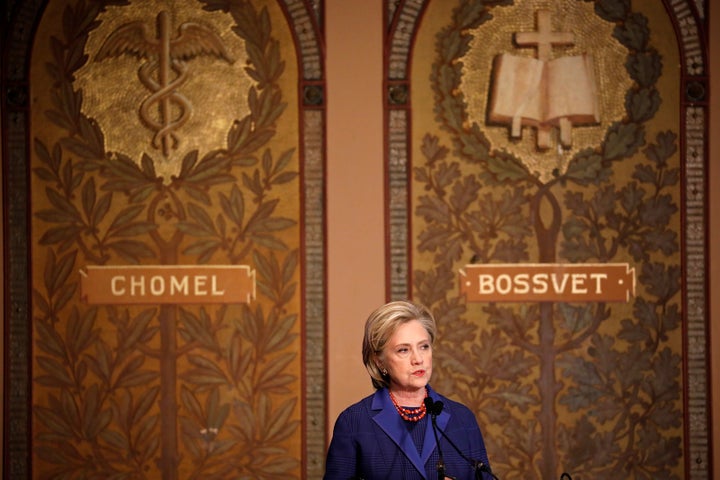
A set of likely presidential candidates will join their party's last nominee, Hillary Clinton, to raise money for the Democratic National Committee next month at its annual Women's Leadership Forum.

California Sen. Kamala Harris, New York Sen. Kirsten Gillibrand, and former Missouri secretary of state Jason Kander will speak at the May event, the second major DNC fundraising effort, following last month's "“IWillVote Gala."

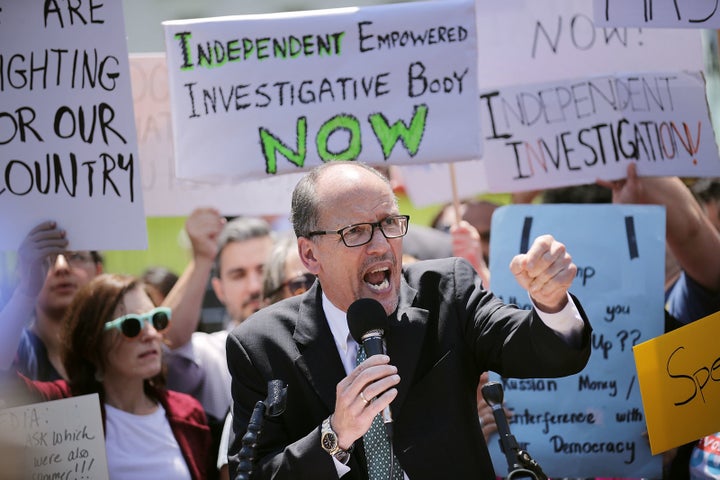
Since early last year, when Tom Perez took over as chair of the DNC, the former labor secretary has faced a steady string of questions about the party's fundraising operation, which has lagged consistently behind its Republican counterpart. In 2017, the DNC raised about $67 million — falling short of the Republican National Committee by all of $58 million.

Clinton's presence at the forum, a likely draw for some of the major donors who supported her campaign against President Trump, will come about two months after she held a New York fundraiser for her post-2016 political group, Onward Together, on the same day as Perez appeared in Manhattan to raise money for the party, drawing complaints from some donors.

The event will mark Clinton's first fundraiser for the DNC since the 2016 campaign, as Republicans continue to run campaign ads against her and some Democrats still question whether her active presence in the party is a helpful one. (Last month, asked in an interview when Clinton will "ride off into the sunset," North Dakota Sen. Heidi Heitkamp, now in a tough red-state reelection bid, answered, "I don't know, not soon enough.")

The DNC is presenting this year's Women's Leadership Forum, an annual event first held in 1993, under the theme, "Women Will Vote" — part of the DNC's new initiative to reach 50 million voters ahead of the 2018 election, a DNC official said on Friday.

Clinton is scheduled to open the event at a welcome reception for guests.

Harris, the first-term California senator thought to be one of the strongest possible contenders in a crowded Democratic primary, will serve as the keynote speaker.

Gillibrand and Kander are slated to speak earlier in the day, along with New York Rep. Grace Meng, Alabama Rep. Terri Sewell, and former Michigan governor Jennifer Granholm.


Source BuzzFeed - Politics https://ift.tt/2HvS0lD

Lawyers For Michael Cohen, Joined By Trump, Fight To Halt Government Review Of Searched Evidence

Mark Wilson / Getty Images

Lawyers for Michael Cohen, joined by a lawyer representing President Donald Trump, were in federal court Friday morning, asking a federal judge to halt review of the evidence seized in the searches against Cohen earlier this week.

The 10:30 a.m. proceeding before US District Judge Kimba Wood was announced by the court late Thursday night, but no additional information was given at that time.

The concerns raised by Cohen and Trump's lawyers surround the attorney-client privilege and how items seized in the search should be reviewed, and by whom, according to reports from the courthouse on Friday morning.

Cohen, Trump's longtime personal attorney, was the subject of widely publicized search warrants that were executed at his office, home, and Manhattan hotel room on April 9.

Cohen's lawyer, Stephen Ryan, has said that the warrants were sought by the US Attorney's Office in the Southern District of New York upon a referral from Special Counsel Robert Mueller's office.

Attorneys from the Southern District of New York (SDNY) represented the prosecution in the hearing before Wood on Friday, the first official confirmation that SDNY is running the investigation that led to the warrants against Cohen.


Source BuzzFeed - Politics https://ift.tt/2EJtFFY

Joe Biden's Establishment Politics Playbook

Jeff Swensen / Getty Images

Joe Biden hasn’t decided whether he’s running for president, but he has assembled a coalition of 30 of some of the biggest names in Washington last month to help shape his domestic policy, from union presidents to former top Obama administration officials to bank officials.

Announced last month, the Biden Institute’s new Policy Advisory Board is the next major piece in what is shaping up to look like a very familiar playbook: a potential presidential run rooted in old-school, establishment politics, capitalizing on his broad popularity among Americans and vast experience in politics. It’s also a sign of what might be a weakness for Biden in a potential primary.

People close to Biden maintain he has made no decisions about whether to challenge Trump in 2020. But the work he is doing now, they say, is with a goal of keeping options open in the event of a presidential run. Said one former Biden adviser, “He’s building out a host of different pieces, and he’s definitely doing that with an eye towards the presidency and the future.”

Though many of Policy Advisory Board members say joining doesn’t mean they’re signing on to support him if he runs for president, the adviser said, “They have to know what they’re doing to some extent. It doesn’t lock them to him, but it certainly encourages them to stay close to him.”

The list of names, with the occasional exception, offers a glimpse of the people that would be likely to orient themselves around Biden in the event of a run: corporate leaders, union bosses, and longtime Obama allies.

There’s senior Obama adviser David Plouffe; former acting Attorney General Sally Yates; top executives at Edelman, JP Morgan Chase, and Morgan Stanley; and the presidents of the Service Employees International Union, the United Farm Workers, and the International Association of Firefighters. There is also Steve Schmidt, a prominent Republican campaign strategist, and former hedge fund boss Eric Mindich.

In a sign of what Biden might face in a presidential primary, though, some progressives see Biden’s advisers as a sign of a candidate that is too centrist, closely tied to corporate and party interests.

“I think this is a missed opportunity for the former vice president, particularly if he’s thinking of running,” said Jim Dean, the chair of Democracy for America, a progressive PAC, of the advisory board. “Most of these folks have corporate-driven missions — they’re funded by big business. The folks that really need to be on a panel like this right now are people that you and I have not heard of that are living the reality that most Americans live on.”

More than a half-dozen members sidestepped questions from BuzzFeed News about whether they wanted the former vice president to run in 2020. Asked if SEIU president Mary Kay Henry had joined in part because she thinks Biden should consider a run, a spokesman said she joined because Biden was "a leader in how we develop and implement public policies that ensure the dignity of all working people."

Many cited longstanding personal commitments to Biden, and a belief that on the issue of the economy and working-class jobs, he speaks uniquely to the kinds of voters that the Democratic Party lost to Trump in 2016.

“The first reason I joined is out of personal loyalty to Biden,” said Larry Summers, a top Obama economic adviser and the former president of Harvard. “The second reason I did it was I think that he’s very focused on what I think is probably the central economic issue for the future of our country — which is improving the lives of working people.”

If he does run, Biden will also likely face some sharp critiques of his 1990s record, from his past role in the 1995 crime bill and the Anita Hill hearings, to his relative political centrism. At a time when the political forces favor opposition, Biden likes to talk about compromise.

Dean, of Democracy for America, said Biden’s advisers were unlikely to consider how closely the vice president’s economic concerns were tied to issues of racial justice.

Biden “comes from working-class roots, and we don’t question that, but times are not the same as when he was going through them,” Dean said. “There’s a racial lens to this that wasn’t as present during the vice president’s time growing up in Scranton.”

Bianchi, the board’s chair and a longtime Biden ally, said the group planned to begin by tackling civil rights issues, adding that "racial economic justice was discussed at length in the initial meeting."

In the year and a half Biden has been out of office, he’s created a network of initiatives that play to his probable strengths: the Penn-Biden Center, which studies foreign policy and diplomacy, including a growing interest in trade issues and problems of globalization, on which Biden has been vocal. There’s the “cancer moonshot,” the Biden Cancer Initiative, which was born out of Biden’s wrenching personal history with his son’s death from cancer in 2015, and the Biden Foundation, which focuses on the social issues he’s kept close — namely gay rights and violence against women.

At the Foundation, those issues have their own new advisory boards, too, stocked with activists and names like Cyndi Lauper and Judy Shepard, Matthew Shepard's mother.

There’s also Biden's book, Promise Me, Dad; the next leg of his drawn-out book tour, in May, is taking him to many of the red states where people have speculated Democrats have a chance of overperforming in 2018 and beyond — Georgia and Tennessee, as well as North Carolina.

The Biden Institute, at the University of Delaware, does domestic policy work — particularly the economic issues that are Biden’s bread and butter. But it will also tackle things like criminal justice and environmental issues, said Bianchi.

The Institute’s advisory board is stocked with longtime Biden loyalists, like the president of the powerful International Association of Firefighters, Harold Schaitberger. The IAFF threw itself in support of a Biden run in 2015, before he had made any formal announcements. When he said he would not run, the union waited months to support Clinton.

This time, Schaitberger said, the situation is much the same. “I wouldn’t want to get in front of my membership or my leadership, but if Joe Biden decided to offer himself up in service to the country, we’d be hard-pressed not to support him,” he said.

But most declined to even allude to supporting Biden if he ran. “I haven’t picked a horse yet,” said Deepak Gupta, a top attorney and Institute board member who has led cases against the Trump administration. Like just a small number of people in the Democratic Party, he said, Biden “has the ability to speak to working-class Americans in a way that resonates with them.”

Schaitberger and others on the board described a Democratic Party adrift — and Biden as one of the few people who could right it by refocusing the party on economic issues.

“Hopefully we’re going to see the political community getting their voice back and start speaking again to workers, and moving away from some of the identity politics stuff,” Schaitberger said. Biden is “clearly a voice that knows how to speak to workers.”

“I know by January, I have to make that decision,” Biden said in a speech at Vanderbilt University on Tuesday. “If God Almighty himself came down today and said, 'The nomination is yours,' I’d say no. Where I'll be in eight months, I don’t know. In the meantime, I'll do everything I can to be sure we elect a Democratic Congress.”


Source BuzzFeed - Politics https://ift.tt/2qtz53B
Thursday, April 12, 2018

The DNC Still Has A Long Way To Go On Hiring Minority-Owned Businesses

Tom Perez

Chip Somodevilla / Getty Images

A year after Tom Perez and other Democratic National Committee leaders promised that diversity hiring would be a priority for the party moving forward, racial and ethnic minority-owned businesses still only accounted for 17.6% of the $17.5 million the party spent on consultant work, according to a BuzzFeed News analysis.

In an analysis of the DNC’s spending from March 2017 to February 2018, $3,076,569 in disbursements for telemarketing, direct mail, and consulting work went to minority-owned businesses.

The BuzzFeed News analysis of federal filings shows that over the past year 6.4% of money spent went to black-owned firms and spending on Latino-run firms was less — about 4.3%.

In recent months, Democrats across the country have declared that black people and especially black women are the “backbone” of the Democratic Party after the constituency helped push the party to wins in places once thought impenetrable, like Alabama — the kind of refrain that frustrates minority operatives who want the party to involve a more diverse set of people at the leadership and policy level.

In response to BuzzFeed News, DNC officials said that the committee has been making a wide variety of changes over the past year, some of which aren’t reflected by pure spending numbers in FEC filings. For instance, officials said that some contractor spending in the March 2017 to February 2018 FEC filings were servicing prior agreements made under previous DNC leadership.

"Democrats have won over the past year because we’ve invested in the women and people of color who form the backbone of our party. That commitment doesn’t end with one election or with one news cycle,” said DNC spokesperson Michael Tyler. “Although outside consulting contracts make up only 2% of our overall budget, we’re focused on making sure we realize that commitment in our contracting process. That’s why these efforts are now being led at a senior level by chief operating officer Laura Chambers, who has ended many previously existing contracts.”

Since new leadership has taken charge of the DNC, officials said, they’ve brought a lot of functions that were previously contracted out to be in house, bringing the DNC’s total spending on outside contracts down to 2% of overall spending. The officials also emphasized that the majority of the party’s spending is on staff salary and benefits, and that currently, staffers of color make up 43% of the DNC workforce, and that 57% of senior leadership is female.

In response to BuzzFeed News, the DNC shared a different of the numbers: Per their method, the party spent $16,065,116.94 on contracts in total, but — removing some non-vendor spending like postage — really spent $10,775,201.21 for the total spending on contracts by including building contracts, like security.

The DNC also include businesses owned by women as a separate category in their diversity statistics. (The BuzzFeed News analysis includes a number of businesses run by women of color and who have consulted for the DNC.) Using that methodology, the DNC reached a figure of $2,264,800.88 spent on minority- and women-owned businesses, including building security, to reach a total of $3,079,216.96 — or 29% minority-and women-owned businesses.

Last February, Tom Perez tweeted that the DNC needed a “top-to-bottom” evaluation of its existing contracts and procurement processes and that contracts should not be “auto-renewed,” in response to DeRay Mckesson asking what the committee’s plan for making sure its money was being directed toward consultants of color.

The DNC has long maintained a lengthy “diversity supplier” list of firms approved to do business with the party where it encourages businesses to self submit information to be considered for potential contracts. The list counts women, the LGBT community, Asians, Latinos, blacks, and the disabled under the same “minority” label, which some in the party have critiqued in the past.

The disparity of contracts awarded to minority firms has long been sore spot between the national party and black and Latino strategists who feel like the party isn’t prioritizing their commitment to recruiting diverse consulting firms. In 2014, a report from PowerPAC+ found that only 1.7% of the $514 million the DNC had spent on consulting over two political cycles had went to businesses that were minority owned.

A DNC official said that the committee has also begun a new contract-approval process that tracks all vendors with contracts of $5,000 and above by a breakdown of gender and racial diversity — a level of detail the DNC has not done in the past in tracking it’s contracting on diversity.

After that report calls for the DNC to improve its numbers when it comes to diversity resulted in the committee hiring its first Chief Diversity Officer, Greg Hinton, to ensure the party was meeting its goals in hiring diverse staff and in contracting but the FEC records show that the DNC stopped paying Hinton for his work in November 2016.

DNC officials said Hinton’s duties become part of the portfolio for the party’s chief operating officer, Laura Chambers.

LINK: From 2015: Democrats Still Haven’t Made Big Changes On Diversity Contracting


Source BuzzFeed - Politics https://ift.tt/2JFPbiL

Wednesday, April 11, 2018

It's The End Of The Paul Ryan Era In Republican Politics

House Speaker Paul Ryan

Aaron P. Bernstein / Reuters

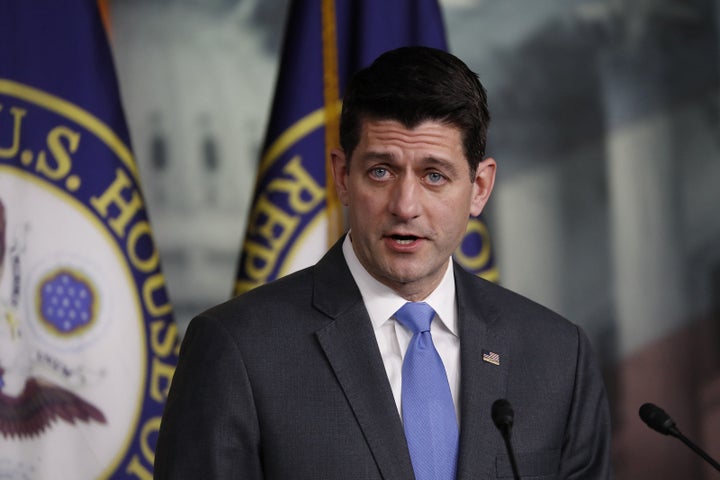
The tributes pouring in for Paul Ryan sound a lot like eulogies — for the retiring House speaker and for the conservative vision he and his allies have long championed.

Ryan’s admirers (and even President Trump, who has a complicated relationship with Ryan) can’t say enough about his accomplishments. And when it comes to his legacy, Ryan, who for much of the last decade was the Republican Party’s ideological architect, has plenty of defenders.

At the same time, however, nearly everyone acknowledges that Ryan is leaving several central stated policy goals unfulfilled. There is mourning for the fiscal conservatism Ryan proposed, or at least doubts about whether that movement can survive.

“No way to spin this as anything but terrible,” one national Republican operative told BuzzFeed News. “Not only is he a great speaker and respected leader — in a body with few at this moment — but it’s got to scare the donor world. Who on earth is going to fill this void?”

As hard as Ryan and other Republicans tout the tax bill they passed and Trump signed, it’s not the kind of revenue-neutral plan that deficit hawks wanted, and it did not include some of the more fundamental tax code changes that Ryan reportedly was interested in, like a border-adjustment provision, which would have changed how imports and exports are taxed. Accomplishments in areas such as entitlement spending remain elusive, too.

Many Republicans blame the shift away from Ryan Republicanism and toward Trumpism, led by a candidate who explicitly promised no changes to entitlements. Despite having an ostensible ally in the executive branch, Trump, to the extent that he gets into the weeds or even interested in conservative policy fights, has proven to be an unpredictable and unhelpful partner.

Minnesota billionaire Stan Hubbard, a longtime Ryan supporter, said the speaker's style of leadership will be missed, especially when considering a president who by comparison focuses less on policy and tends to say and tweet things that distract from the party’s agenda.

"He's a calm and level-headed guy. That kind of leadership will be missed." Hubbard said of Ryan. "My father used to tell me, ‘Stanley, flies never enter mouths that are closed.’”

Others downplayed Trump as a factor in Ryan’s decision.

“He has been in Congress for 20 years, and he has always said he was going leave and return” to Wisconsin, a senior aide to one House Republican told BuzzFeed News. “Now he is doing that. Does Trump play a role in that? Slightly he does. I think deep down inside, the speaker doesn’t like or trust him. But I do think the family was his driving source.”

Another major party donor, who gives to multiple conservative groups, said it was an "overstatement" to describe the Republican Party as the Party of Trump, but acknowledged the loss of Ryan combined with the retirements of others, like Rep. Jeb Hensarling of Texas, would hurt the conservative cause. "It's very sad to lose someone with his incredible knowledge,” the donor said. “He's truly a man of great knowledge and sadly he took on a role that wasn't suited for him. I can only hope he continues to be a part of these fights in some way."

Some even see a day when Ryan’s brand of Republicanism is back in style.

“I have a hard time believing legacy-wise this is the last chapter in Paul Ryan’s career,” Nick Everhart, a Republican media consultant with extensive House experience, said in an email. “After the ‘Trump Era,’ there will be a thirsting for leaders like him again.”

It wasn’t all that long ago when Ryan was the next big thing in Republican politics. Ryan was the co-author, with fellow lawmakers Eric Cantor and Kevin McCarthy, of the 2010 book Young Guns: A New Generation of Conservative Leaders. Two years later, when he was selected as Mitt Romney’s vice presidential running mate, he was hailed as a policy wonk inside the party and in media — making him the logical heir to conservatism. His claim to that mantle grew even stronger three years after that, when he reluctantly took the gavel as House speaker.

But Cantor is gone from Congress, following a surprise primary loss in 2014. And now Ryan is on his way out, meaning that, within a decade, two of the three Young Guns authors will have left politics.

McCarthy, who succeeded Cantor as majority leader, could succeed Ryan if Republicans keep the House. And John Murray, a longtime adviser to Cantor, believes there is another group of leaders who will carry on that kind of conservatism that emerged in the Obama years.

"You have a lot of people who came to Washington under the Young Guns program," said Murray, who hopes some of those members will step up. "There are still more of those members than not. These institutions go through changes, and we're just seeing another one now."

Bridging the different factions of House Republicans — ranging from the more classic mainstream fiscal conservatives like Ryan to harder-line libertarians and the populists and Freedom Caucus types who rose from the tea party — is a challenge, though, as Ryan found.

“When one takes on the burden of the speakership they subjugate many of their personal political goals in order to accomplish the task of finding compromise across the disparate opinions of a 400-plus legislative chamber,” said one former chief of staff to a House Republican. “He managed that task with grace, and that he was able to also accomplish one of his personal goals — reforming the tax code — is that much more impressive for his legacy.”

Other Republicans are willing to grade Ryan on such a curve.

“I mean, everything we have passed in the House and signed into law since Trump was elected has Ryan paw prints all over it,” said the senior House aide. “Like every member we know the things arent perfect and there are things you would want to see fixed. But my God, Ryan was able to pass tax reform for the first time since Reagan was in office. That was huge.”

Ryan Ellis, a conservative tax policy consultant who has worked closely with House Republican leadership, noted Ryan’s reputation for austere budget proposals when he was chair of the Budget Committee and called them a blueprint for eventual entitlement changes.

“He even got so far as to pass a bill to reform two of them — Medicaid and Obamacare — last spring,” Ellis wrote in an email. “But that effort was derailed by a handful of myopic Republican senators. … The silver lining is that there aren't too many practical ways to do entitlement reform, and Ryan's budgets provide a detailed plan the next time the politics are ripe.”


Source BuzzFeed - Politics https://ift.tt/2Ht6Rxg

Tuesday, April 10, 2018

Federal Agents Seize Communications Of Trump's Personal Lawyer, His Lawyer Says

Michael Cohen

Mark Wilson / Getty Images

Federal agents executed "a series of search warrants" on President Donald Trump's longtime personal lawyer Michael Cohen on Monday, according to Cohen's lawyer.

"Today the US Attorney’s Office for the Southern District of New York executed a series of search warrants and seized the privileged communications between my client, Michael Cohen, and his clients," Cohen's lawyer, Stephen Ryan, said in a statement. "I have been advised by federal prosecutors that the New York action is, in part, a referral by the Office of Special Counsel, Robert Mueller."

The special counsel's office and the US attorney's office in Manhattan declined to comment on the move, which was first reported by the New York Times.


Source BuzzFeed - Politics https://ift.tt/2qisQPi

Saturday, April 7, 2018

Progressives Are Trying To Train Candidates To Run On Economic Populism In Conservative Districts

Scott Olson / Getty Images

Hundreds of Democratic candidates at different levels are expected to attend a training session next week where they’ll be told that running on policies like Medicare-for-all and debt-free college are strong ways to run in purple and red districts across the country.

“There’s lots of energy surrounding the resistance and people have decided to get off the bench to run for office,” said Stephanie Taylor, the co-founder of the Progressive Change Campaign Committee, which is holding the program in Washington. “We’re helping these people build the infrastructure they need to win.”

The training comes at a time where a surge of progressive grassroots energy has helped the Democratic Party make inroads in elections that should have easily been won by Republicans in typical years. But these aren’t typical circumstances and the successes the party’s celebrating in races in Virginia, Alabama, and Pennsylvania are accompanied by strenuous intra-party fights that have bubbled to the surface over what kinds of candidates and messages Democrats should be pushing to flip the House seats in congressional districts that lean conservative.

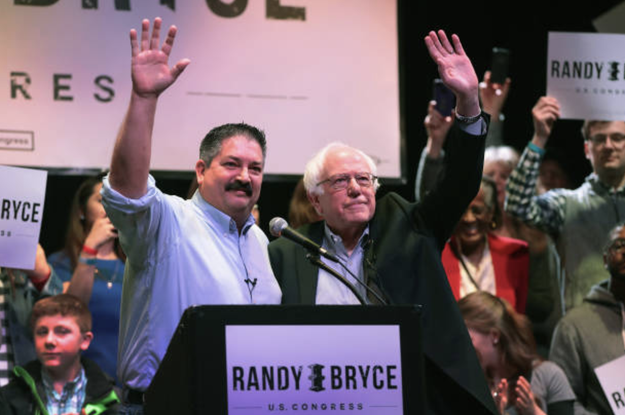
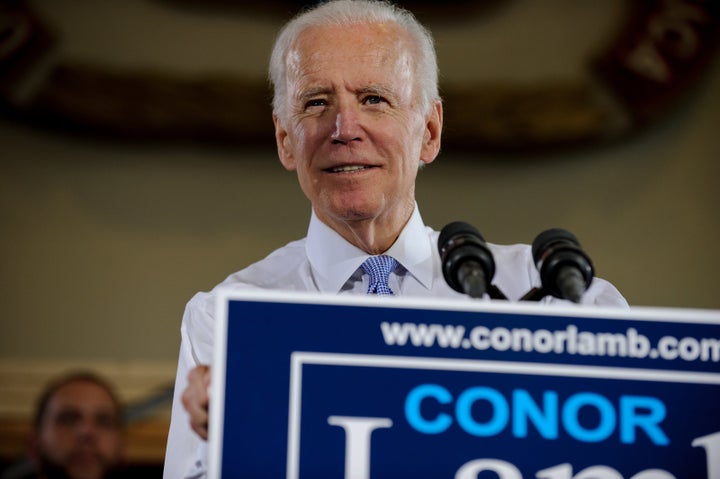
PCCC officials point to candidates like the recently successful Conor Lamb, or like Randy Bryce, the Wisconsin ironworker who’s running to challenge House Speaker Paul Ryan, as examples that Democrats don’t have to shy away from progressive values to gain support or even win in tough districts.

Lamb notably ran as a near cultural conservative, identifying himself as personally against abortion and in favor of gun rights, while emphasizing that he would not vote for Democratic Minority Leader Nancy Pelosi. He did, however, run with the backing of prominent trade unions and opposing the recently passed Republican tax law.

Of the 450 candidates attending the training — which will involve programming about the basics of small-donor fundraising — 70% are running for office in 2018, and 64% running at the state and federal races are running in districts Trump won in 2016, according to PCCC.

The event is the biggest effort taken on by PCCC, a group that has long been active in progressive politics and over the last few years has seen politicians rise on further-left economic messages.

“There’s been some debate in the Democratic Party about what candidates to run with establishment supporting more centrist Democrats but economic populist policies are the way to campaign in these districts,” said Taylor. “The average American doesn’t care about corporate tax credits when they’re up and worried about how they’re going to pay for their medical treatments at night and we need to keep pushing the party to represent these everyday Americans.”

“That’s really what the progressive platform is about, it can resonate with people who are financially stressed,” said Kara Eastman, who’s running in Nebraska’s’ 2nd Congressional District against former Democratic Rep. Brad Ashford, who’s been endorsed by the Blue Dog Coalition, a small group of conservative Democrats. “When we talk about policies and elections there’s a disconnect between the policies some of the establishment supports and what voters actually want and need.”


Source BuzzFeed - Politics https://ift.tt/2qb26B4